Gion Matsuri
Hello my lovely blog post readers! My name is Romi Manela, I am a 4th year Health Sciences Major at Northeastern University, and today I will be walking you through the fun-packed 17th day of our Food in Japan Summer Dialogue.
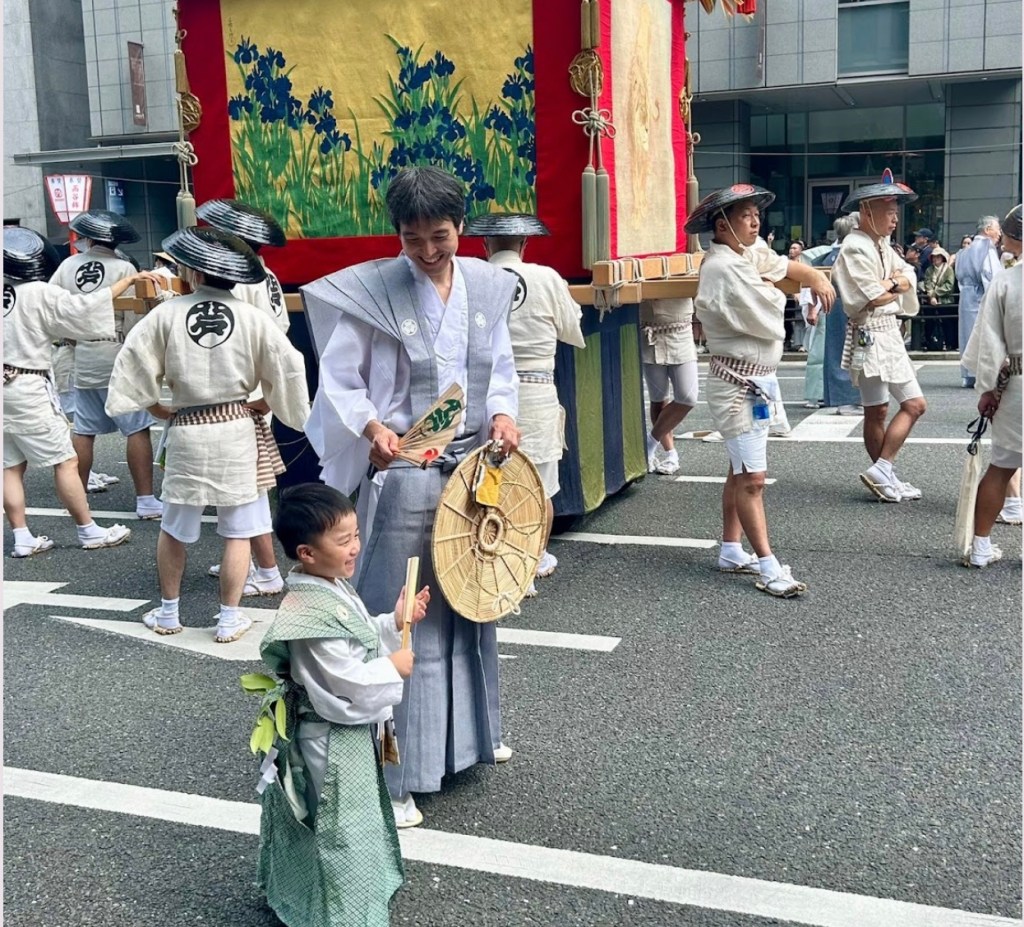
Welcome to Gion Matsuri, Japan’s most famous festival held in Kyoto, hosted by Yasaka Shrine. The highlight of the festival was the grand procession of floats; The crowds packed tightly in order to glimpse the grandeur of the Yamaboko floats of Gion Matsuri. Upon doing some research into the festival, I learned that the larger floats are called hoko, towering up to 25 meters and weighing 12 tons, dwarfing the people in the crowds. Both types of floats are decked out in intricate decorations, each telling their own unique story. We were able to catch a better view of the floats by climbing up to the second story Starbucks and watching from the window alongside other excited onlookers!

The festival’s history dates all the way back to 869. The origins of the Gion Festival are rooted in a time when a plague hit Kyoto in 869. The Emperor sent a special messenger to Yasaka Shrine to pray for mercy from the Gods against the illness, marking the festival’s birth. By the year 970, it became an annual event. Traditionally, a local boy is chosen as a divine messenger and is paraded through town without touching the ground from July 13 to 17.

Despite some interruptions, such as wars in the 15th century, the festival always returned. Interestingly, there was some debate within Japan about holding the parade during the height of the Covid-19 pandemic in order to provide symbolic protection, but ultimately the big parade event was canceled to abide by public health safety guidelines.
Miyako Ecology Center
In the afternoon, we headed over to the Miyako Ecology Center. Established in 2002 to commemorate the 3rd session of the Conference of the Parties to the United Nations Framework Convention on Climate Change (COP3) held in Kyoto, we learned that this organization serves as a center for Kyoto’s environmental education materials and advocacy work. From our experience in hotels and other establishments thus far, we have noted that Japan is very conscious of the SDG’s and the importance of environmental protection in general. The staff at Miyako Ecology Center provided us with kind hospitality and a great educational experience!

During the presentation, we learned about how Kyoto addresses various important environmental issues such as global warming prevention and waste reduction. During our tour, we were able to experience their interactive exhibits, including a seesaw demonstrating average energy use per person, trash cans representing average personal trash production throughout the decades, and displays demonstrating the resource intensity of producing various food items. I thought the exhibits were a great way to make complex environmental issues tangible and easy to understand, especially for younger audiences! During our visit, we saw many kids running around, simultaneously enjoying the exhibits and learning about the effects of global warming, waste reduction, and energy conservation in Japan.
For me, the rooftop exhibit was a highlight of the center, featuring a rice field, agricultural field, and pond. This living exhibit showcased seasonal vegetables, flowers, and plants, demonstrating sustainable practices in a hands-on way.

Piccolo Bambino
For dinner, a few of us moseyed on over back to Momoyamagoryomae, Dr. Young’s old stomping grounds from when he lived in Kyoto. We dined on classic Italian fare at Piccolo Bambino prepared masterfully by the chefs, including vodka penne, spaghetti pomodoro, and margarita pizza. We all collectively enjoyed the excellent company, as well as the Japanese take on Italian classics.

Cafe la siesta
Finally, many of us came together to round out our night at Cafe la siesta, a local Kyoto arcade cafe (recommended by Kelly) which provided a whimsical atmosphere filled with gaming decor and complete with various retro arcade games. We raced pixelated mario kart cars, played intense rounds of card games, and battled it out on tabletop 1v1 gaming displays. Overall, we had a great time at this unique Kyoto spot; thank you Kelly!


 Japanese Food Bites: Indulging in the Taste of Summer
Leave a reply to YukariSakamoto Cancel reply