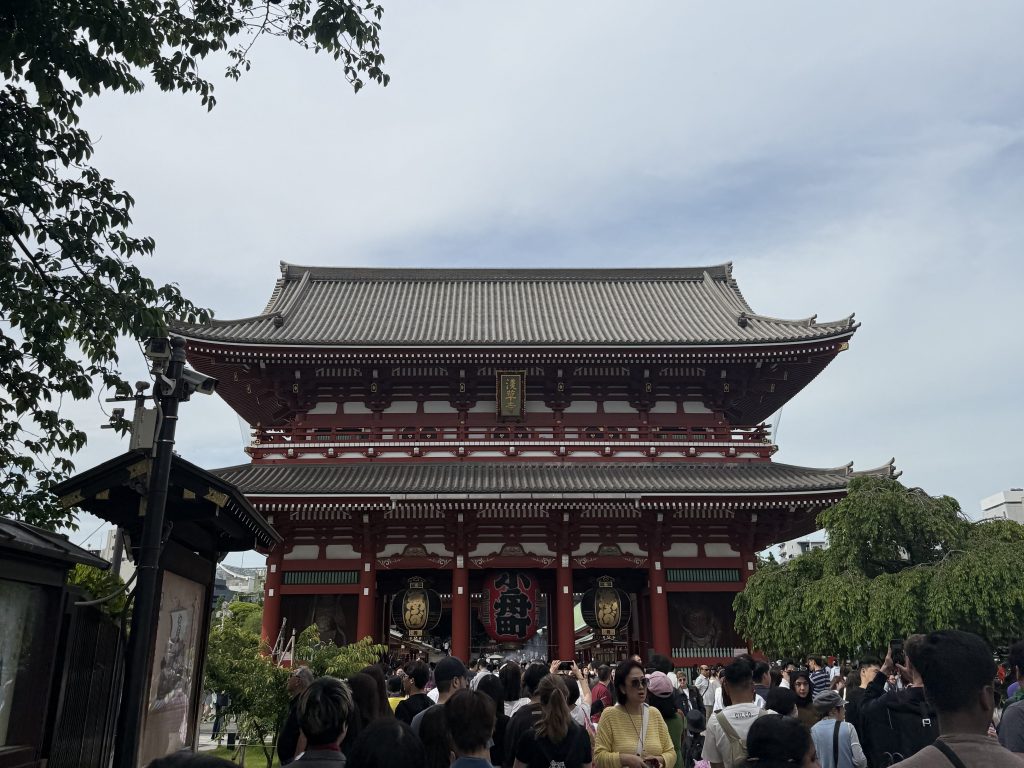
When was the last time you slowed down long enough to actually smell the roses? For me, today was that day. Hi! My name is Antonia, and today I had one of the most memorable days where time seemed to slow down just enough for me to enjoy every moment of where I was. A few of us students had the chance to visit Tokyo’s oldest temple: Sensō-ji, a Buddhist temple nestled in the heart of Asakusa. It’s hard to believe that the original structure dates back to 645 AD—a number that felt distant and abstract until I stood beneath the temple’s grand red gates.
Though the current buildings are reconstructions (the temple has been rebuilt multiple times, including after being destroyed in World War II), they hold a deep sense of memory. The buildings felt charged with something timeless, like each beam and lantern carried whispers from centuries ago. Until I was physically there, I didn’t realize how much history could be felt, not just studied.
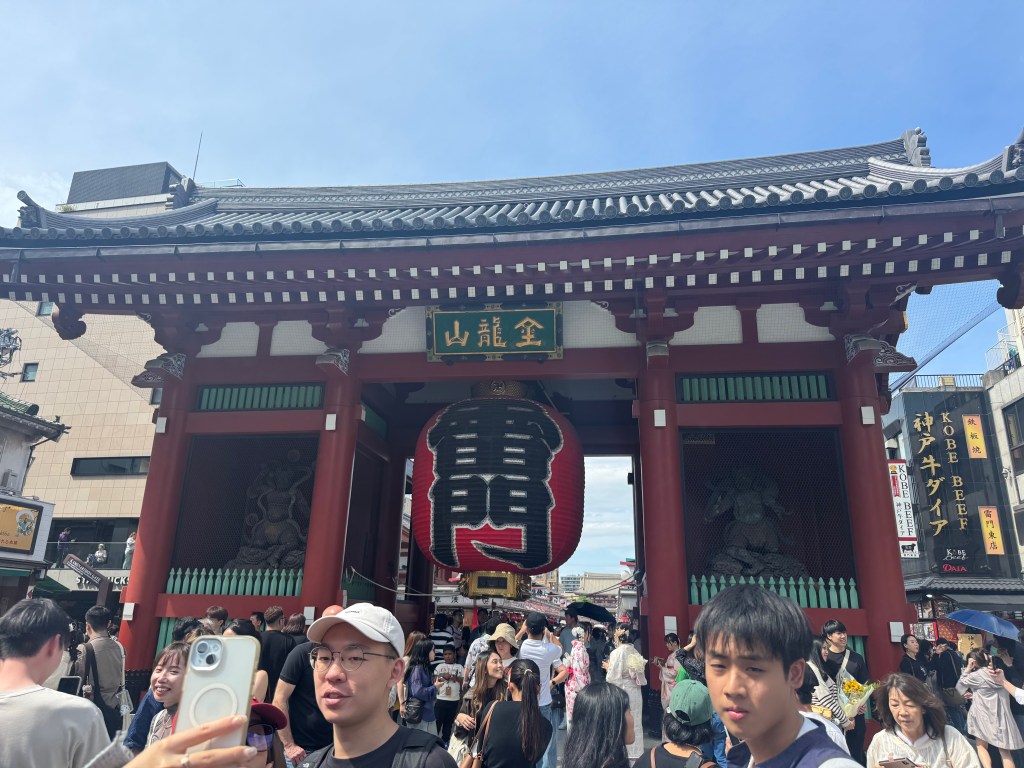
As we explored the grounds, there were plenty of small rituals and experiences to take in—some playful, others deeply spiritual. My friends and I drew fortunes from rustic wooden drawers, washed our hands with holy water, and wandered down Nakamise Street, where colorful shop stalls line the path like a scene from another time. The scent of roasted rice crackers and sweet red bean buns filled the air.
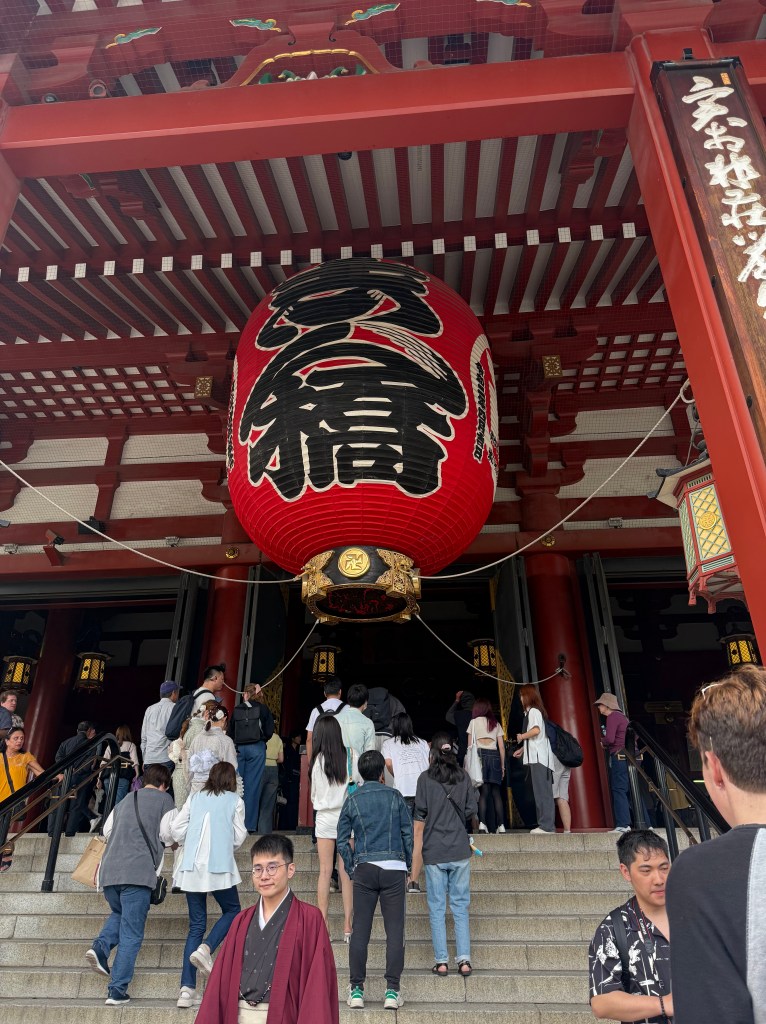
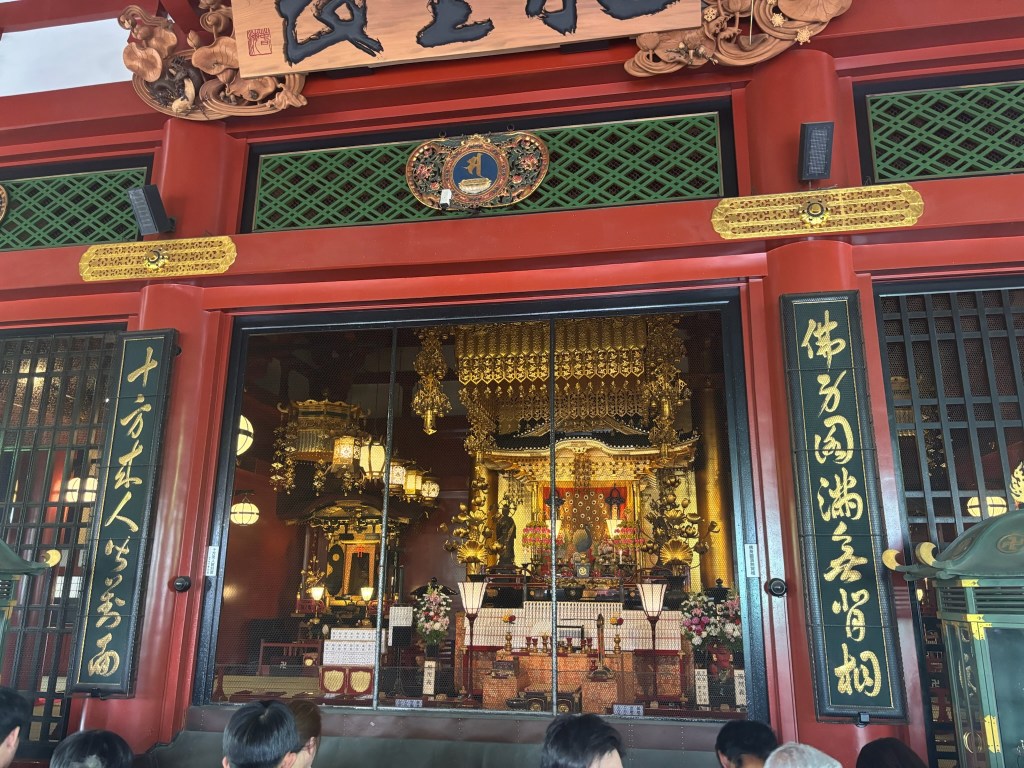
One of the most magical parts was just observing the people—so many from around the world—drawn to this place of beauty and peace. I couldn’t help but imagine the temple hundreds of years ago: monks walking through the corridors in silence, incense floating skyward in the early morning light. There was something grounding about knowing I was walking through a place that has meant so much to so many, across generations. Luckily as we made our way to the main temple, I was able to stand back and close my eyes, taking in the serenity.
Once we left the temple, hunger kicked in fast. We found a tiny, tucked-away ramen shop that barely had a table big enough to fit the seven of us. It was the kind of place where the steam fogs up the windows and you can hear the chef calling out orders from behind the counter. Let me just say, I had the best ramen of my entire life. The ramen arrived piping hot, its savory aroma curling up in steam that made my mouth water. I lifted the noodles—soft, golden, and just the right amount of chewy as they soaked in the rich, umami broth. Each bite was a mix of tender pork, silky yolk from a perfectly cooked egg, and just enough heat from a dab of chili flakes. For a moment, the table went quiet—everyone lost in their own bowl of comfort.
After lunch, we wandered deeper into the winding streets of Asakusa, drawn in by the promise of small artisan shops tucked into every corner. Each alley seemed to open up into another stretch of carefully curated storefronts—selling everything from hand-forged knives to delicate hairpins to earthy, matcha.
I then interviewed (had a lovely chat with) Persia, a fellow student. I asked her about her experience through the temple and what stood out to her most. She said it was seeing so many people dressed in traditional kimonos, trying to experience the temple in a more authentic way. Persia talked to me about how she finds it fascinating that so many people come to take photos and pray dressed up in traditional apparel. She also mentioned that it was interesting to see the people that were simply there for the tourist attraction it was. To say that they visited the Sensō-ji temple as just another box to check off.
It made me think: while some may be chasing the perfect Instagram moment, others seem genuinely interested in connecting with the culture. But the line between respect and performance can blur. Later that evening, I did a little digging and learned that the rise in tourism has unfortunately led to increased issues at Japan’s religious sites—vandalism, littering, and general misunderstanding of the spaces’ sacred nature.
That realization stuck with me. One thing I will take away from today is how I want to be more intentional to understand the meaning behind the places I visit, not just see them through a tourist’s lens. Sensō-ji gave me more than a beautiful photo or a cultural checkbox. It gave me perspective—on history, on presence, and on the responsibility that comes with being a visitor.


 Japanese Food Bites: Indulging in the Taste of Summer
Leave a comment