What do soy sauce, miso, natto, and sake have in common?
That’s right, they all use koji!
Koji is a food inoculated with fungi most often the mold Aspergillus oryzae. At the miso factory “Kojiya Saburouemon” in Nerima, Tokyo rice koji is used to make miso. However, what’s special about Kojiya Saburouemon is that it is a family business spanning 7 generations and 120 years of handcrafted, additive free, and halal miso.
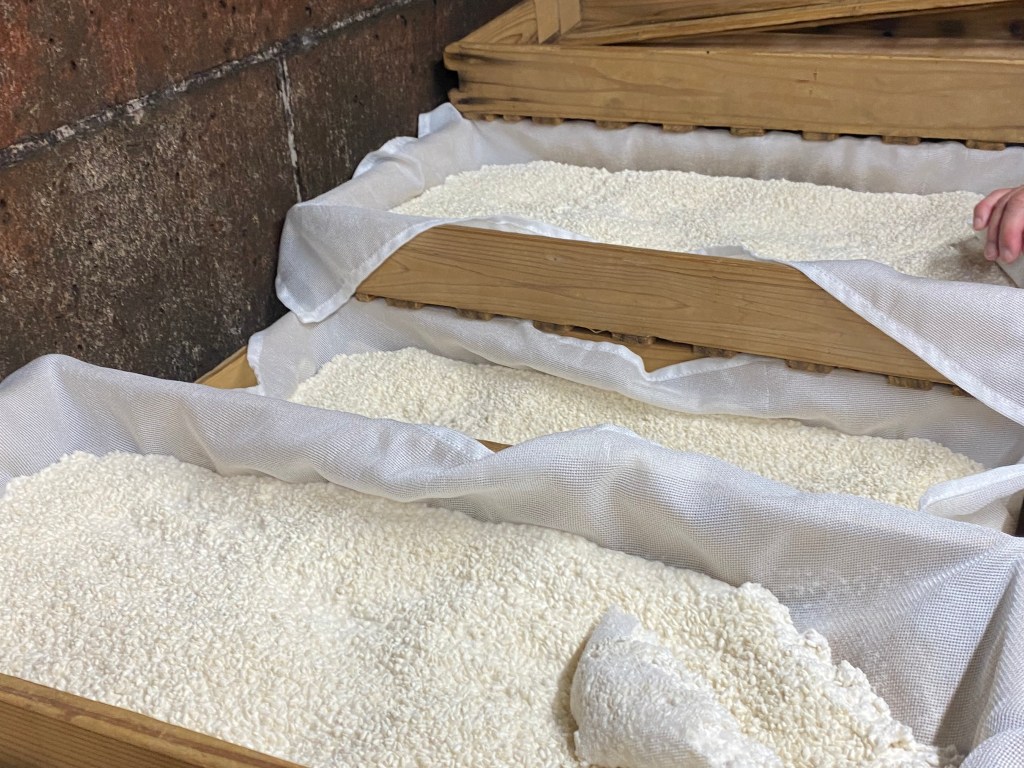
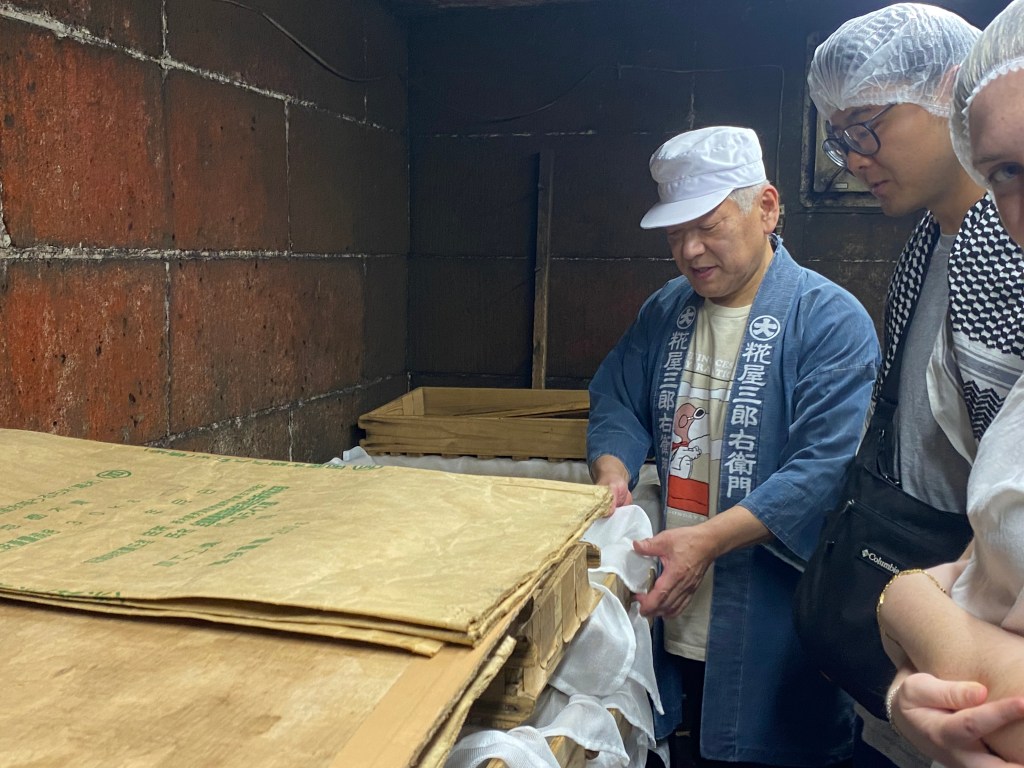
Upon arriving at the factory, which is more accurately referred to as a storehouse, we were given hair nets to keep sanitary standards and was then led inside by Mr. Tsujita, the owner. First stop, koji. We entered the storage room for koji in groups of 4 through what looked like a hobbit sized opening. However, inside were stacks of fluffy rice koji that in the words of my classmate, Summer Lam, “looks like rice crispies”. The koji was harvested from steamed rice, inoculated with A. oryzae and grown for at least 2 days at 32°C, 70% humidity.
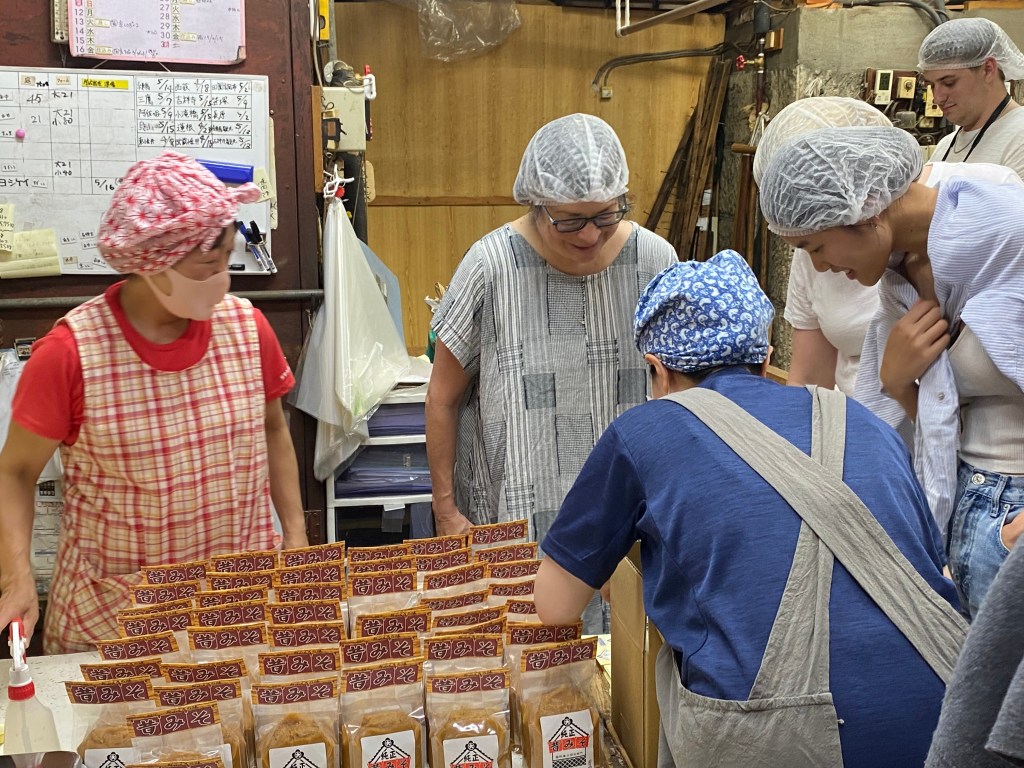
Outside of the koji storage room where two women who were meticulously hand packaging miso. This was different from what I’ve seen in other factories where everything is packaged by machines. The women warmly invited us to try and package some miso ourselves and after every person finished they exclaimed in praise, “Jouzu ne!” Meaning good job. The miso here is truly handcrafted with love.
Miso here is made from mixing soaked soybeans, salt, and rice koji. The miso ferments in large barrels for at least 4-6 months where it obtains a light brown hue similar to that of peanut butter. Then, the miso is mixed again by a machine. Miso that is fermented for about 12-14 months has dark brown color. The texture of the miso was like a paste and smelled like soy sauce. Upon my first taste I recoiled at how salty it was. The older miso had a much deeper taste. Along with the saltiness it tastes of soy sauce and a hint of alcohol. This sourness is due to the lactic bacteria in older miso. Persia, Ben, and Professor Ito agreed that the taste of the darker miso was similar to the crushed olive spread, Tapenade.
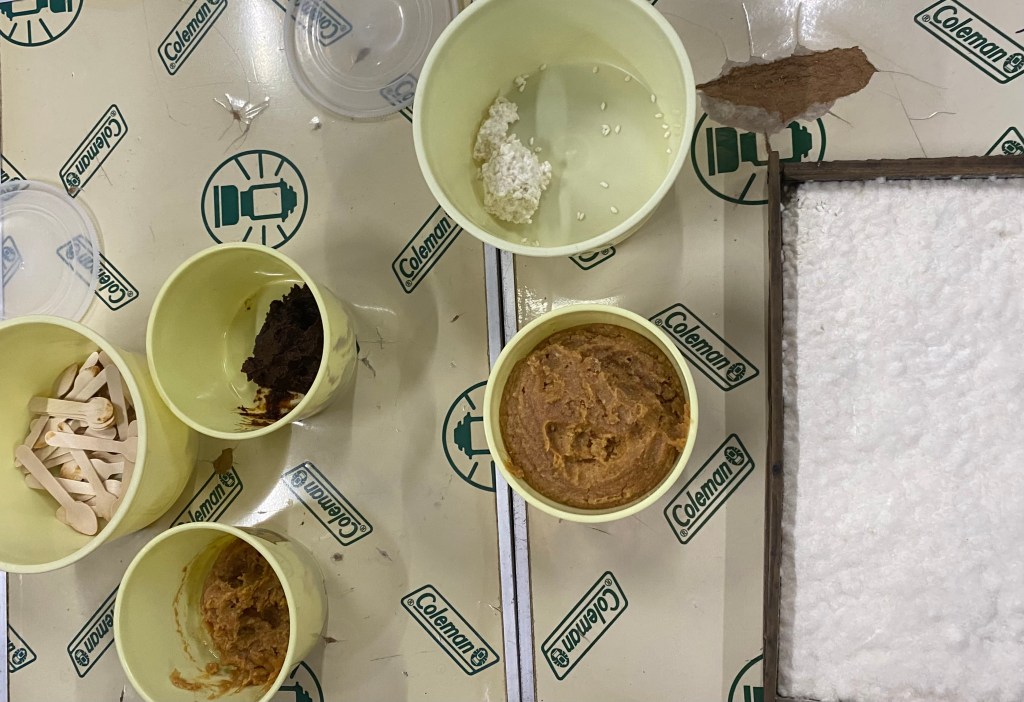
In Japanese dishes, miso is used as a seasoning in soup, stews, sauces, and marinades. It’s also considered nutritious due to the soybeans it’s made with. Mr. Tsujita explained that the light miso is usually used in vegetable broths and lighter soups as to not change the color and keep the taste delicate. While, the darker miso is used in stews and to even marinate meat as miso contains enzymes that break down and tenderize meat.
However, for Japanese people, miso is not just a salty seasoning. Mr. Tsujita mentioned how miso is a point of pride for Japanese people because of how every region has a different version of it. He further added how miso soup is referred to as a mother’s food or comfort food in Japan because of how its taste is unique in every household.
As every day passes, I continue to learn how food is not just something people eat to survive, but it’s an indication of a communities philosophy on life and the environment, a gesture of love and comfort, and a point of unity.


 Japanese Food Bites: Indulging in the Taste of Summer
Leave a reply to YukariSakamoto Cancel reply