Walking into the ryokan felt like being transported to the Edo period, a time when weary travelers would seek refuge from their long journeys and bathe in the onsen for its medicinal qualities.
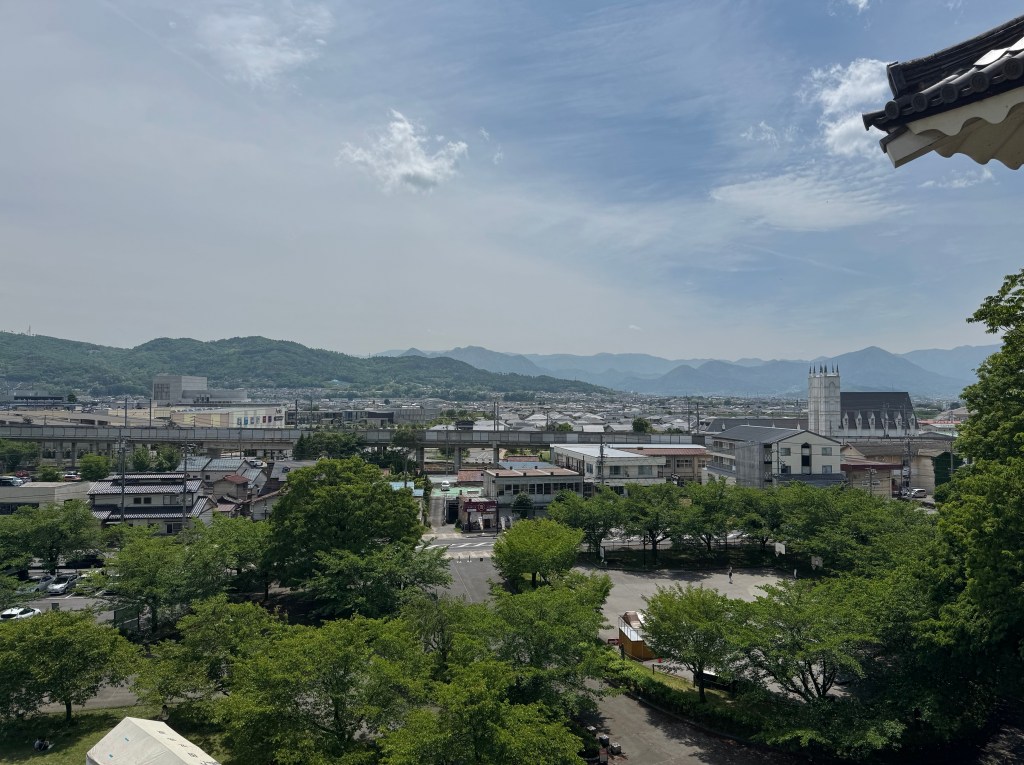
My classmates and I had been particularly looking forward to our mountain getaway in Ueda for quite some time—to escape the hustle and bustle of a big city like Tokyo and seek out the unique, lesser-visited gems Japan has to offer.
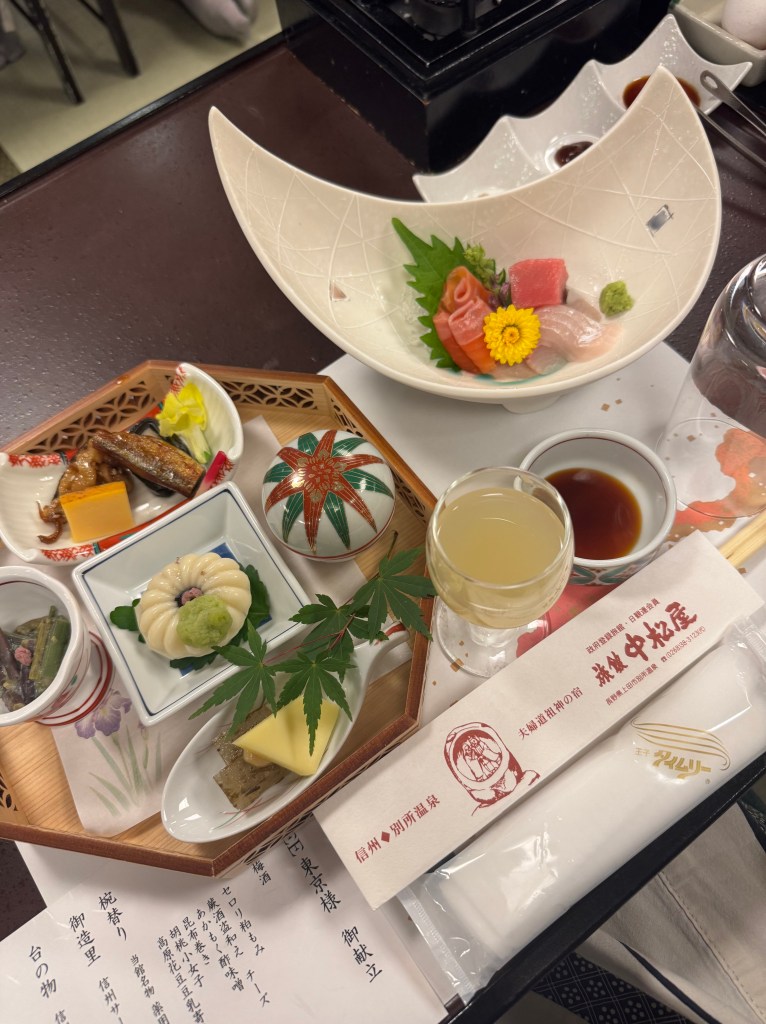
As part of the ryokan experience, we indulged in a ten-course, seasonally curated dinner. As we had learned earlier, kaiseki dinners in Japan vary by season, highlighting fresh, locally sourced vegetables and ingredients unique to the time of year.
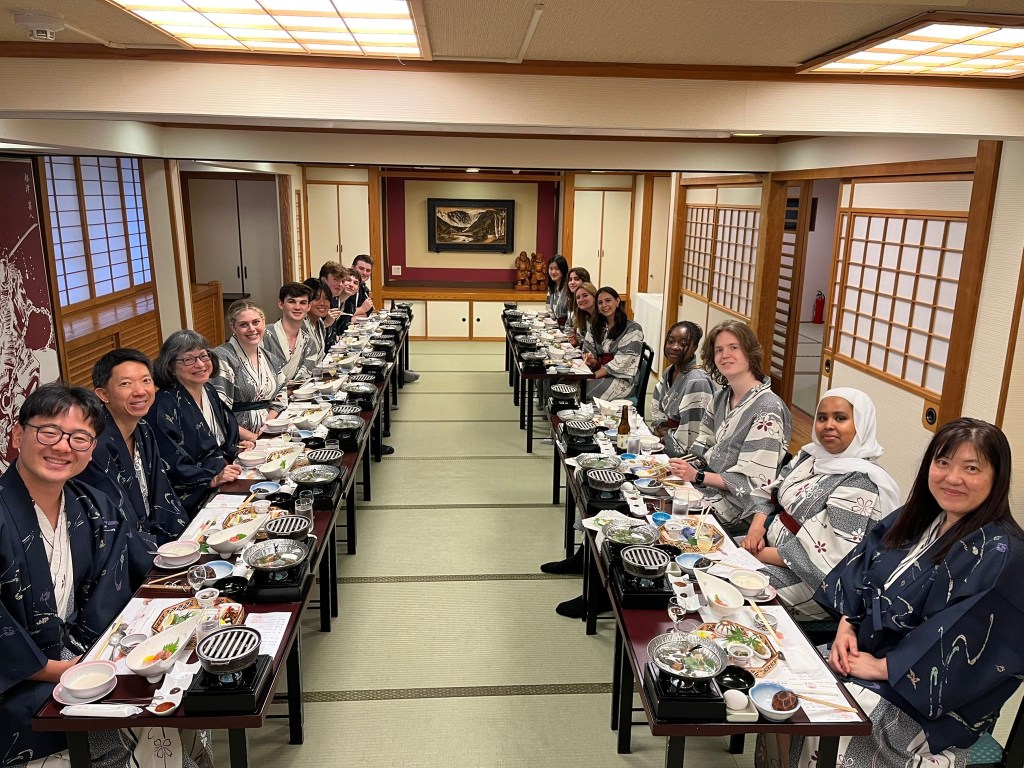
Going into dinner, I wasn’t sure what to expect. Even though we’d received the menu beforehand, nothing could have prepared me for the beauty of the presentation. The appetizers were already set out for us as we walked into the room. Once I got situated and took a closer look, I realized it wasn’t just a meal—it was art. Edible art. It felt as if I were eating from a canvas, my chopsticks doubling as paintbrushes. Beauty is in the eye of the beholder, but everyone seated in the two long rows—shoulder to shoulder with individual tables facing one another like school desks—was clearly amazed by the spread. We could see each other’s expressions as we dove into our food.
Everything was explained to us in detail, but no words could truly describe the flavor of these items. The appetizer was divided into five parts, each featuring seasonal vegetables, fish, a few types of cheese, and more. The centerpiece first caught my eye—it reminded me of the tiny pumpkins I decorate my room with for Halloween. It turned out to be a jelly filled with red bean paste. While the presentation was beautiful, the appetizers themselves didn’t leave a strong impression—visually stunning, but mild in flavor. Just as we were finishing, a warm heirloom carrot soup was served. Creamy with the perfect touch of spice, the broth felt healing.
Rating: 4/10
Next, the kind ryokan staff brought out half-moon-shaped ceramic bowls of flowered sashimi paired with fresh wasabi. There were a variety of different fish but all of them tasted like butter. I made the mistake of taking too large a bite, and my eyes started watering. Rating: 9/10
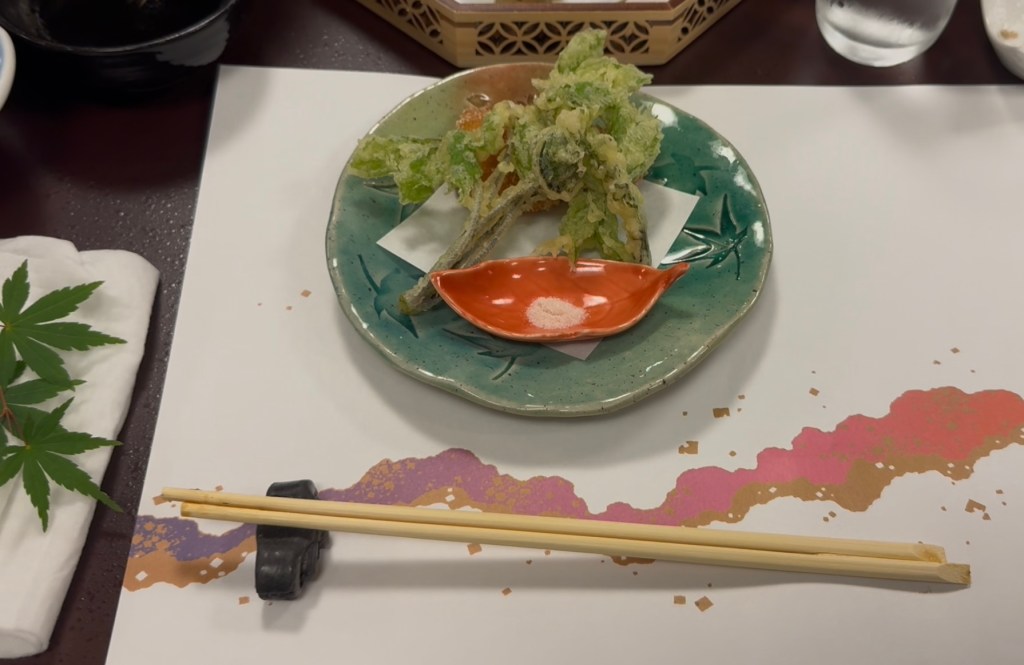
Across the room, people could see my face light up with joy when I saw the next dish: tempura. This dish holds a special place in my heart. Taking the first bite of sea bream, a veggie I had never tried before paired with the crisp, airy batter, was a phenomenal combination. During this course, my classmate Michael made a comment I won’t forget. Referring to one of the pieces of tempura, he said, “It was like the fish was born with batter.” Hilarious as it was, it also speaks to the incredible care and craftsmanship these chefs put into creating such a special meal for people like us, who may only experience something like this once in our lives.
Rating: 9/10
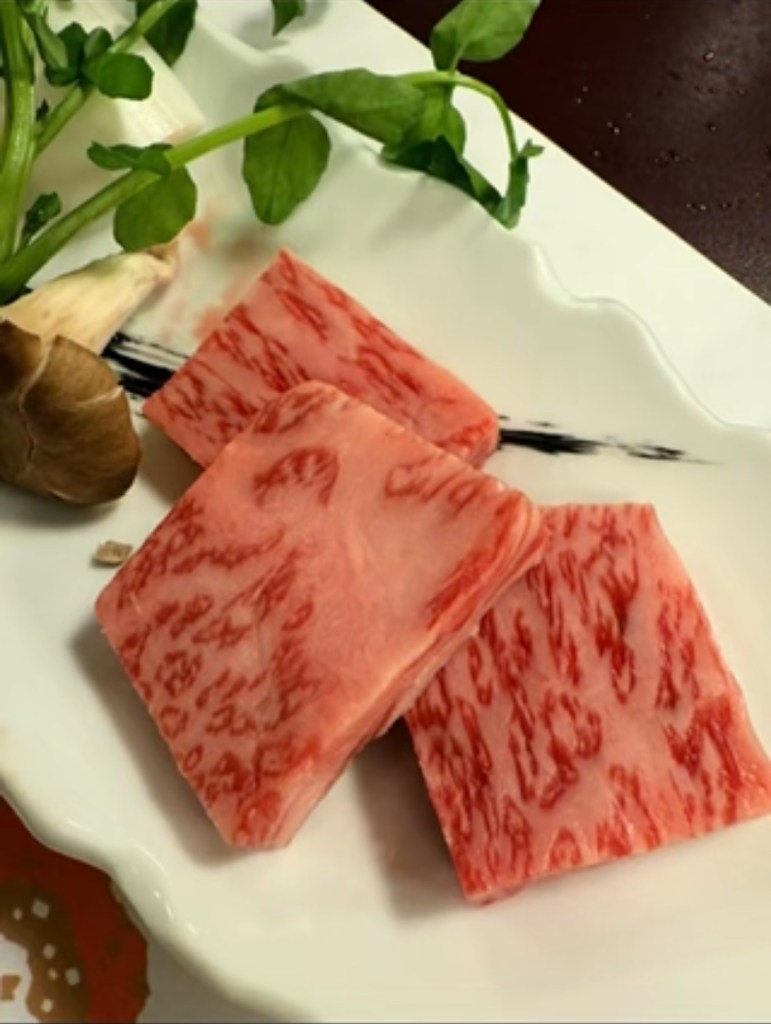
Among the most popular parts of the dinner, according to my peers, was the activity of cooking our own meat and vegetables on small, table-side wax grills. It kept us entertained, with laughter flowing as the wagyu beef sizzled and popped. Flipping the meat to reveal perfect charcoal grill lines was mouthwatering. After a few minutes, the exterior was perfectly browned, while the interior remained soft and red, cooked just right. The marbling of fat throughout the wagyu melted into the meat like butter on a hot pan. The vegetables helped balance the richness, though the heaviness of the beef lingered.
Rating: 8/10
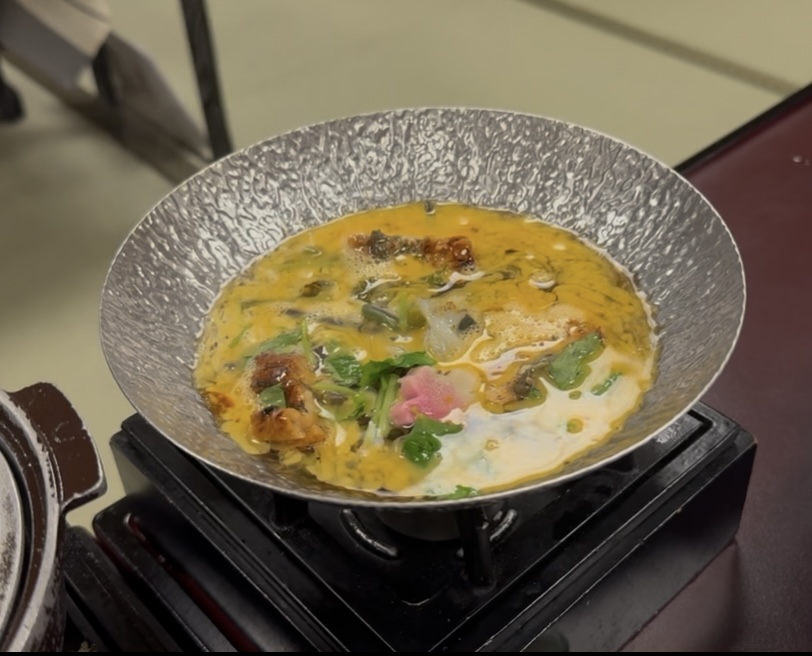
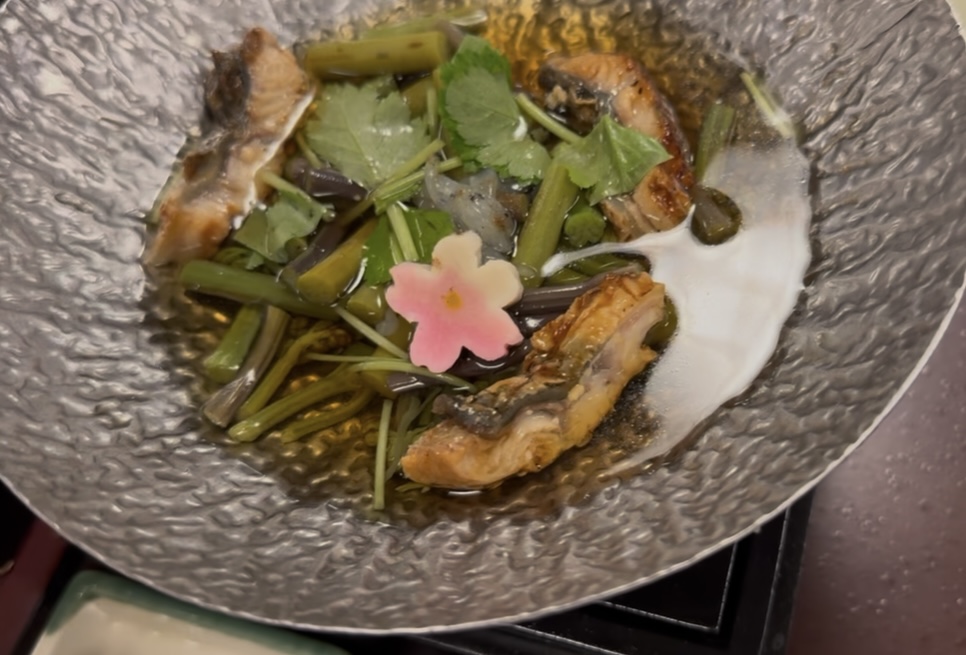
On the left side of our table, a soup base simmered most of the night, filled with eel and small fish. Visually, the dish matched the washoku color palette. Once it boiled, we were instructed to scramble in an egg. Watching it sizzle and snap as the yellow jelly yolk mixed with the brown broth was oddly satisfying. The taste, however, caught me off guard. I’d never had sweet sauce paired with fish, and after trying it, I can confidently say they shouldn’t be combined. The eel was tender, but the fruity sweetness took away from its natural flavor. On the other hand, the bamboo shoot rice served alongside it was a personal favorite. I had never tasted anything like it before. The staff, noticing how much we enjoyed it, kindly made us rice balls with the bamboo rice later in the meal. The soft, chewy texture was pure comfort, and I hope to find it again in future meals. The miso soup featured a variety I hadn’t tried before, with floating chunks that were fun to slurp as I tried to make room for the next course. Rating: 6/10
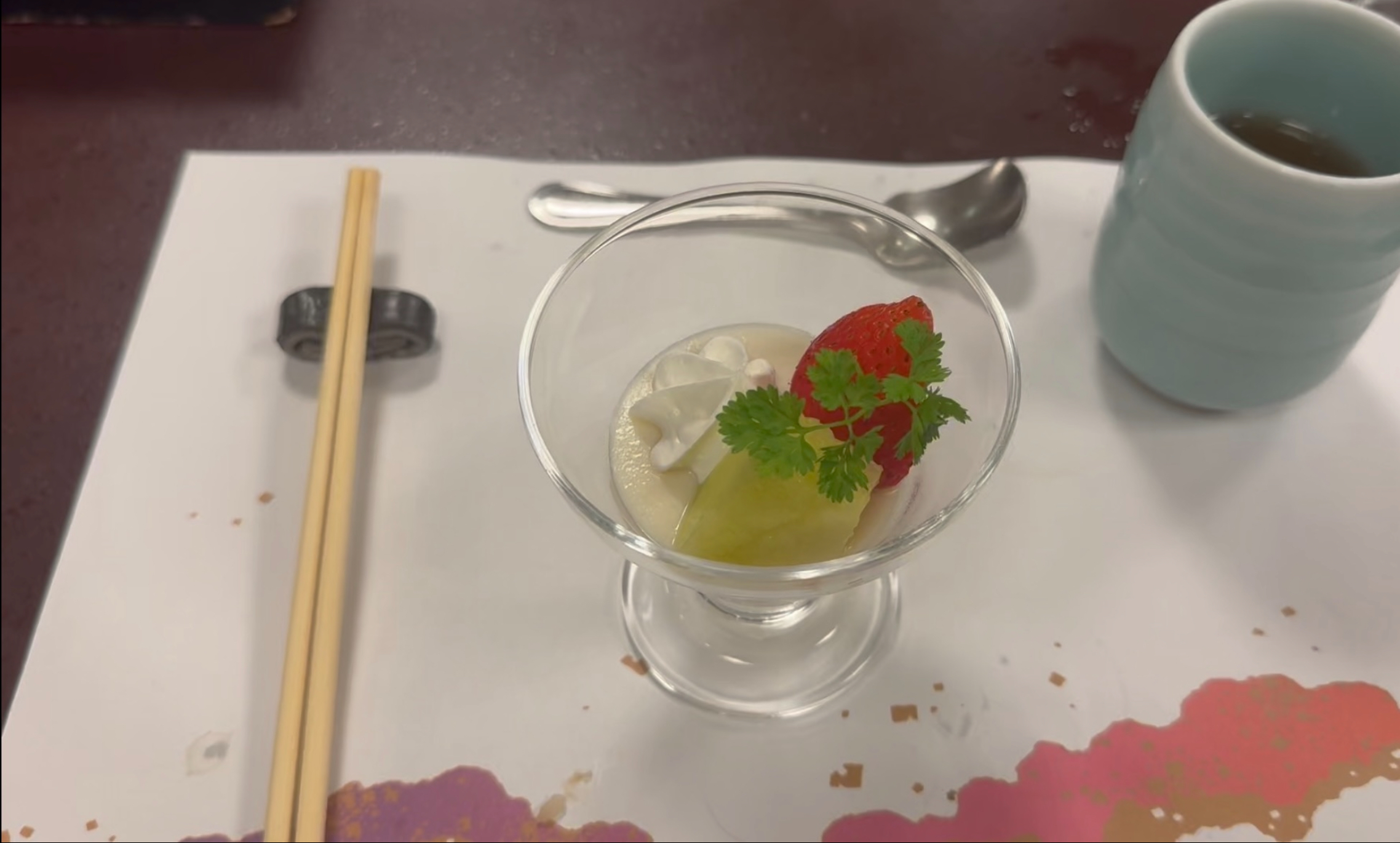
Finally, dessert arrived. I felt a small sense of triumph, I had made it through the entire meal. We’d been warned about the size of the dinner and advised to fast during the day, advice I, unfortunately, didn’t follow(ops). Dessert was a tuple of sesame jelly, served in a decorative pudding glass. Its flavors were more subtle than expected; I mostly tasted the coconut cream and fruit that adorned the top.
Rating: 6/10
I had a truly lovely time stepping out of my comfort zone and experiencing the culinary art these traditional chefs so graciously shared with us. I would absolutely recommend trying a traditional kaiseki meal while in Japan—not necessarily for the food, but for the artistry and cultural richness behind it. I would rate the overall experience highly, even if the food itself was at times underwhelming.


 Japanese Food Bites: Indulging in the Taste of Summer
Leave a reply to Jo Guarin Cancel reply