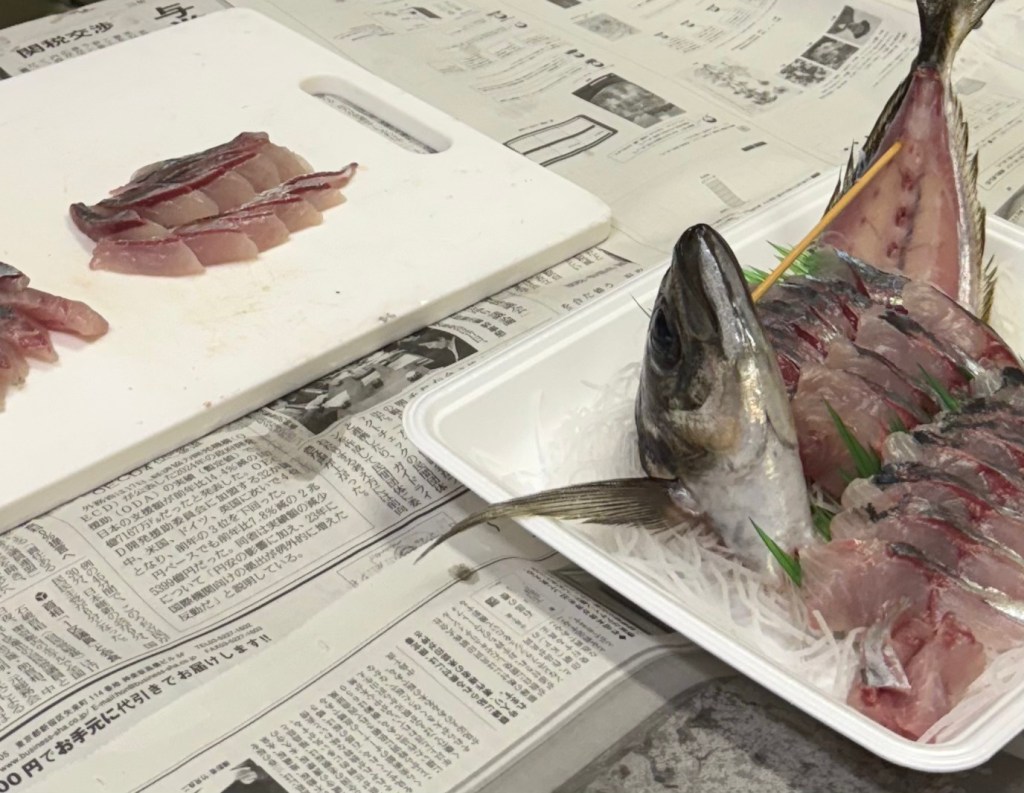
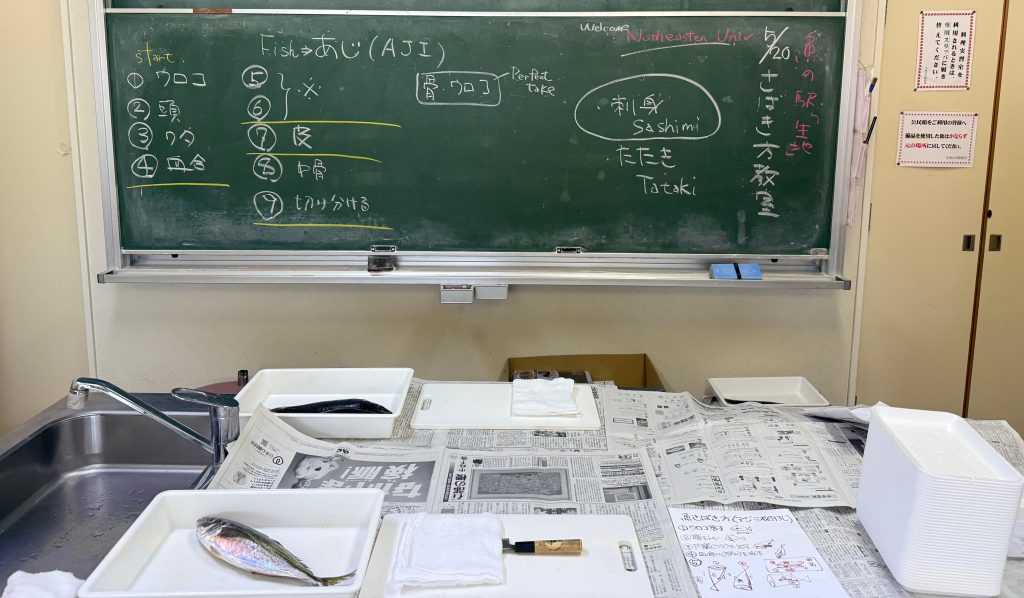
The morning air in Kurobe was crisp, carrying the salty tang of the sea of Japan as we gathered around in a small room with 5 counters for a sashimi masterclass. Today’s star was fresh horse mackerel (Aji), caught just hours earlier, its scales still glinting like liquid silver under the market lights. The manager, a craftsman with years of knife work behind him, laid out the fish with reverence. “Aji will taste good no matter what,” he said with a laugh. “If it’s not, its on you.”
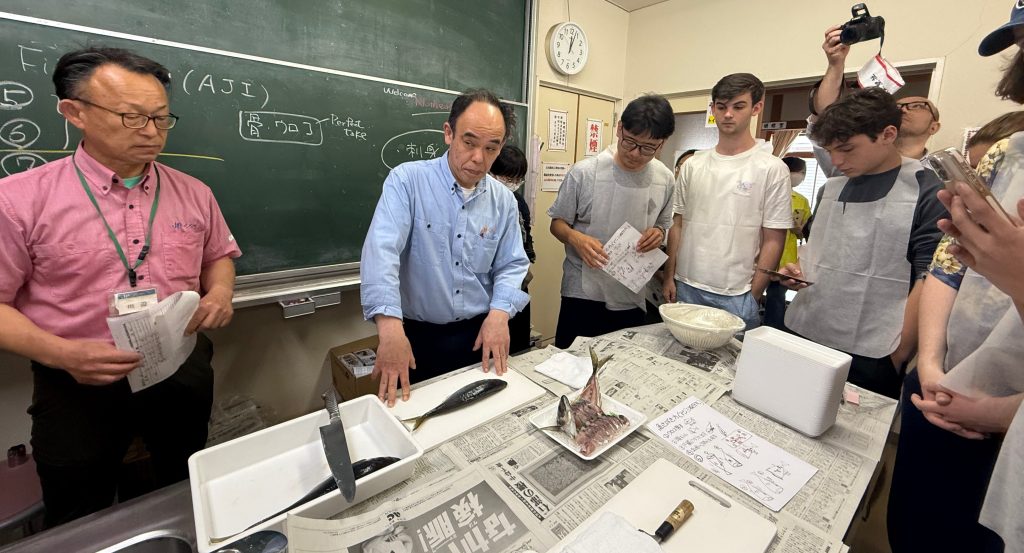
The manager’s hands moved with the quiet confidence of a concert pianist as he began the demonstration. His knife was basically an extension of his arm. There was no hesitation, no second guessing, just a series of fluid motions that transformed the gleaming horse mackerel from whole fish to perfect sashimi in minutes. I wonder how many years of practice did he put into that.
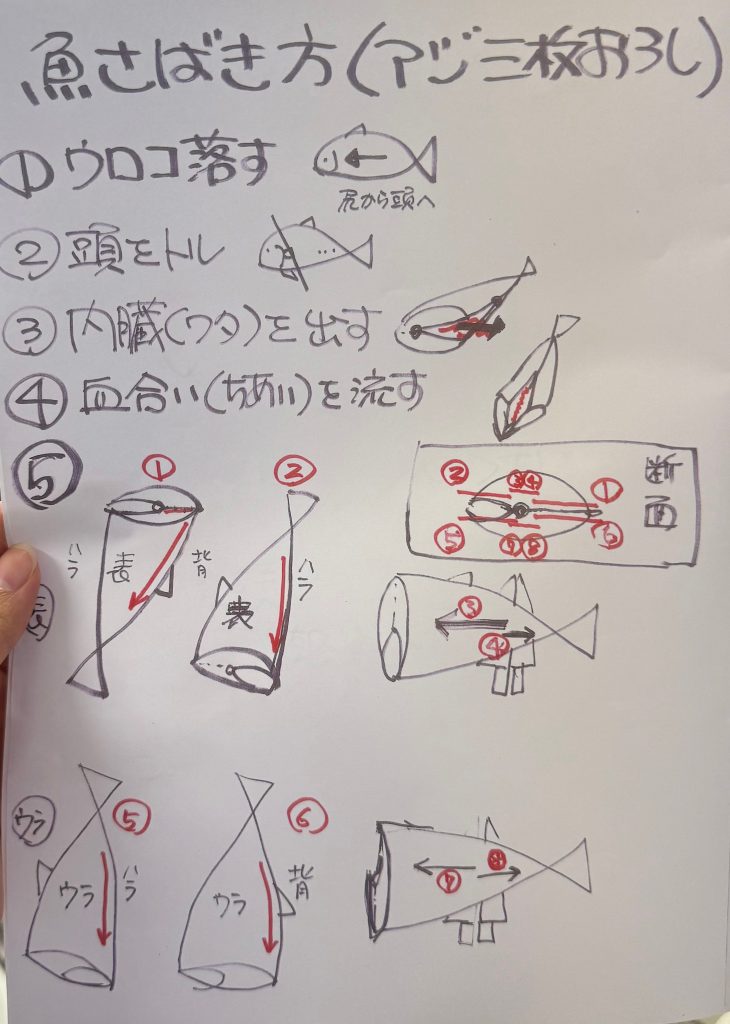
The sashimi masterclass was an eight-step journey in precision and respect for the fish:
1. Descale the fish thoroughly.
2. Remove the head.
3. Make an incision from the belly to the anus (about an inch long), then carefully remove the organs and rinse the cavity.
4. Fillet the fish by slicing cleanly along the backbone.
5. Remove the skin.
6. Trim off any remaining bones to ensure a clean cut.
7. Slice the fillet into elegant sashimi pieces.
8. Finally, savor and enjoy the result of your careful work.
Then it was our turn. What had looked effortless in his hands and all those YouTube videos I’ve watched about sashimi suddenly felt like performing brain surgery with a butter knife. They lied to me. I barely knew how and where to get started.
Skinning broke me. That moment when you pin the fish, slide the knife under, and pull, it’s supposed to come off like a silk sheet. Instead, the skin clung like it had personal beef with me. Too much angle? The blade dug into flesh. Too gentle? Nothing moved. And when I finally got it, half the belly meat came along for the ride (as seen in the picture below on the top right).
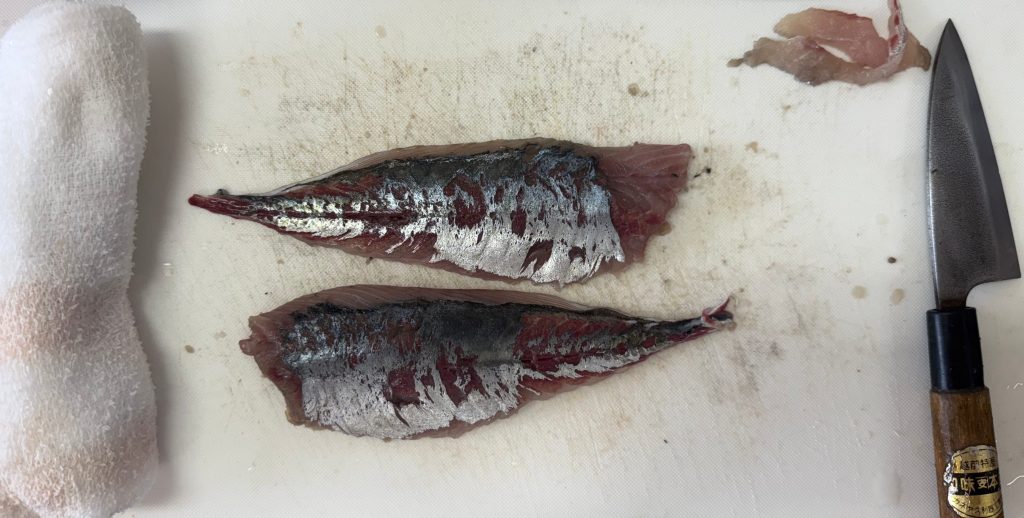
For Brianna, one of my classmates, the toughest part was filleting the fish along the backbone. She mentioned it’s the real hit or miss moment, that’s where the best cuts come from, so getting it right takes serious focus and precision. One wrong angle, and you lose a chunk of meat.
Sashimi isn’t just about cutting fish, it’s about respect, patience, and precision. The manager and all those YouTube videos made it look easy because people have spent time mastering every motion. Our attempts were clumsy, but that’s the beauty of learning: you have to be bad before you can be good.
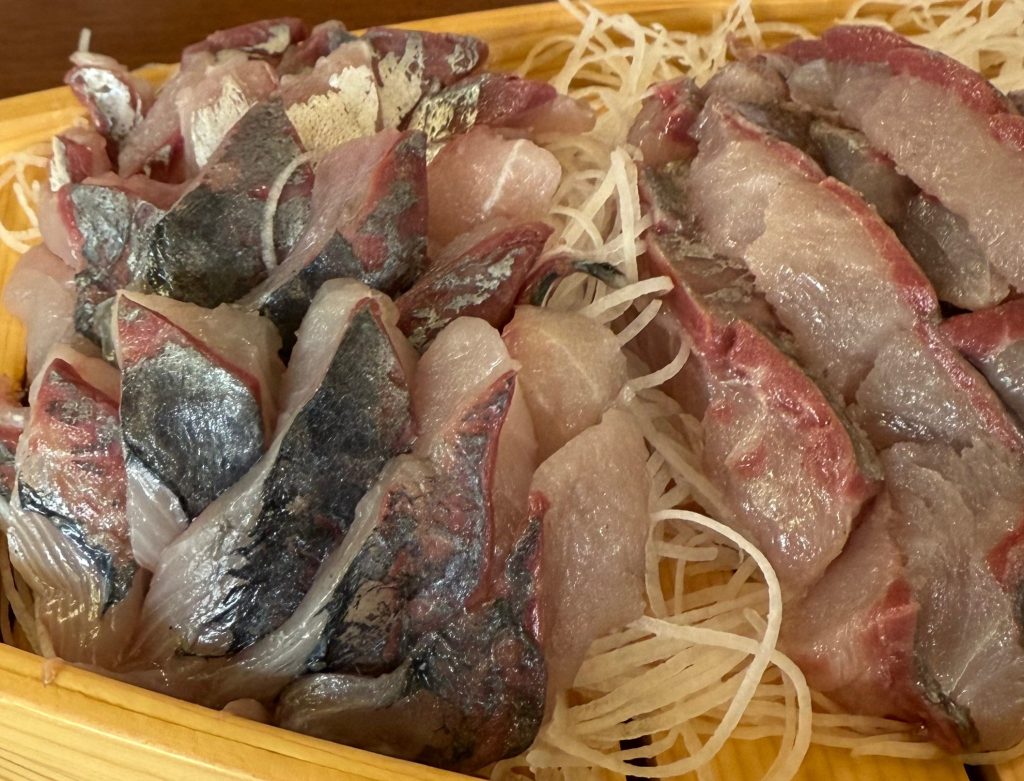
And as I chewed my uneven slices of mackerel, I couldn’t help but appreciate the artistry, and the humility that goes into every perfect piece of sashimi.



 Japanese Food Bites: Indulging in the Taste of Summer
Leave a reply to Beth Hastie Cancel reply