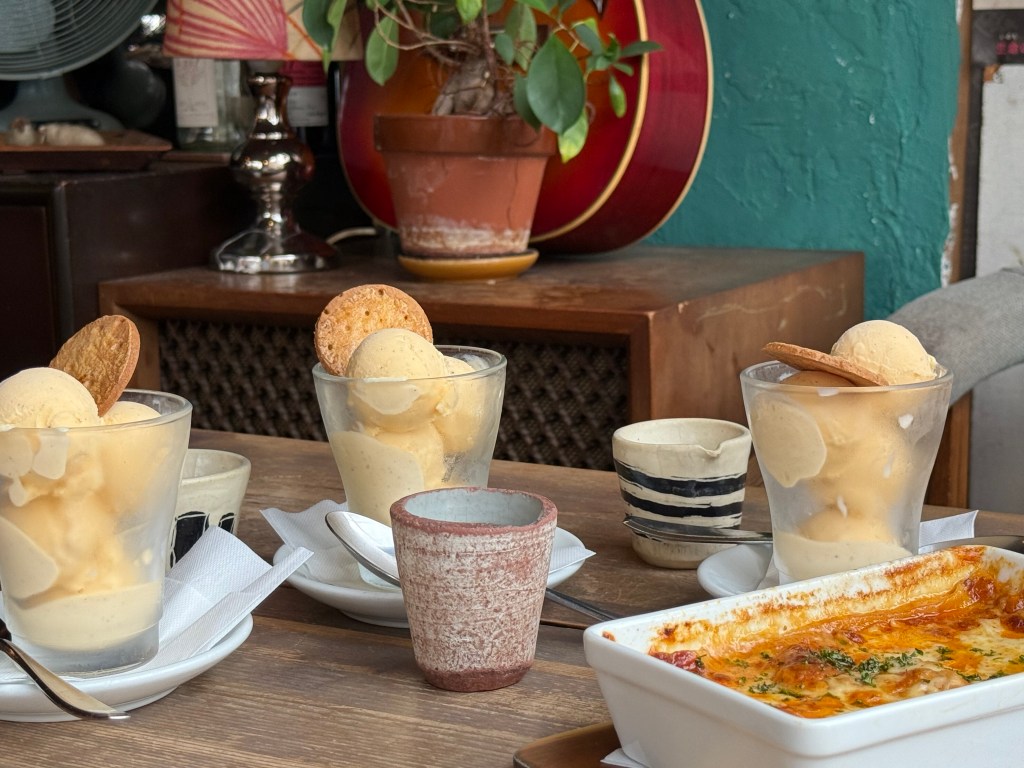
Many times, a visit to Kyoto comes with waiting in long lines for tourist attractions and long hours perusing Google Maps looking for a nice, local place to sit down and have a nice meal. This is exactly what I wanted to avoid when I arrived in this ancient capital. I signed up for this Dialogue of Civilizations to experience everything Japan has to offer and a personal goal of mine was to avoid the many tourist traps in major cities such as Kyoto. Today, with a couple of new friends as company, I wandered off into the hot afternoon sun to explore the real Kyoto.
Earlier in our day, our creative writing class at the historic Ryukoku University had us expressing our creativity in a different manner. Instead of pen and paper, we picked up our watercolor paint brushes and colored pencils to draw some of our most memorable experiences from our time in Japan so far. Some people drew onigiri from the conbini that looked like I could eat it right off of the canvas, while others illustrated their favorite place to do karaoke or play pool. Personally, I opted to depict my one true love, Pocari Sweat, an electrolyte beverage akin to what many in the United States refer to as Liquid IV. I have always had a love for drawing and portraiture; many times you can find me drawing when I lose interest in a lecture. This class inspired us to visit some of Kyoto’s renowned museums to explore Japan’s deep history with different forms of art, with hopes that this would help us connect with Kyoto’s history on a deeper level.
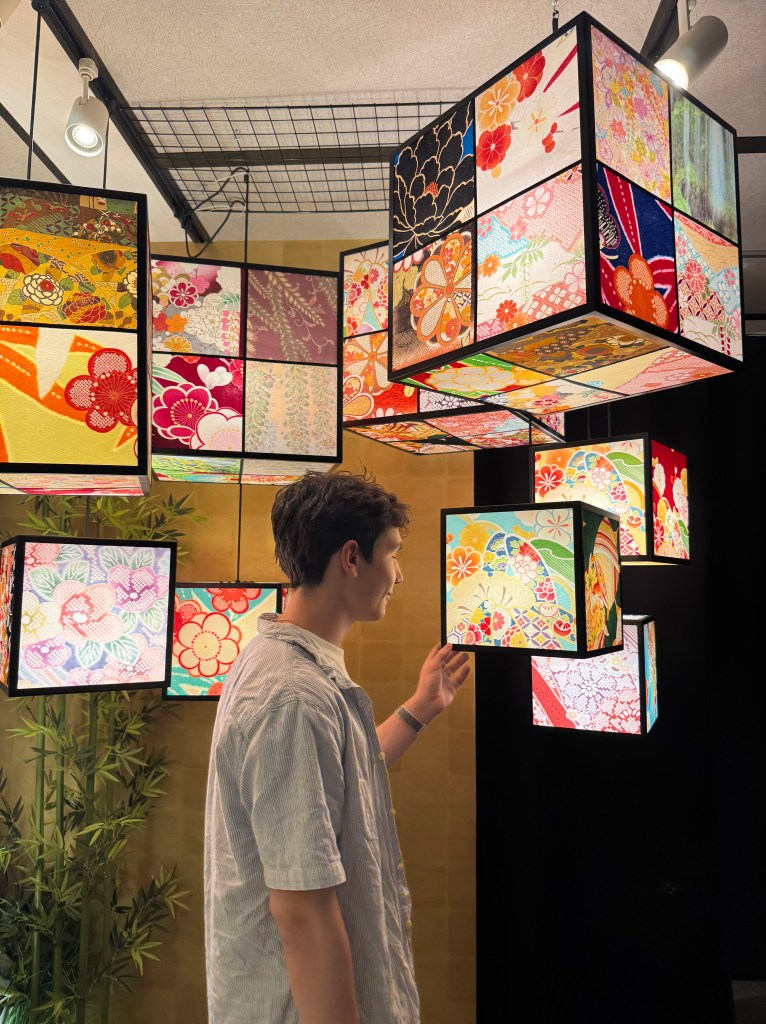
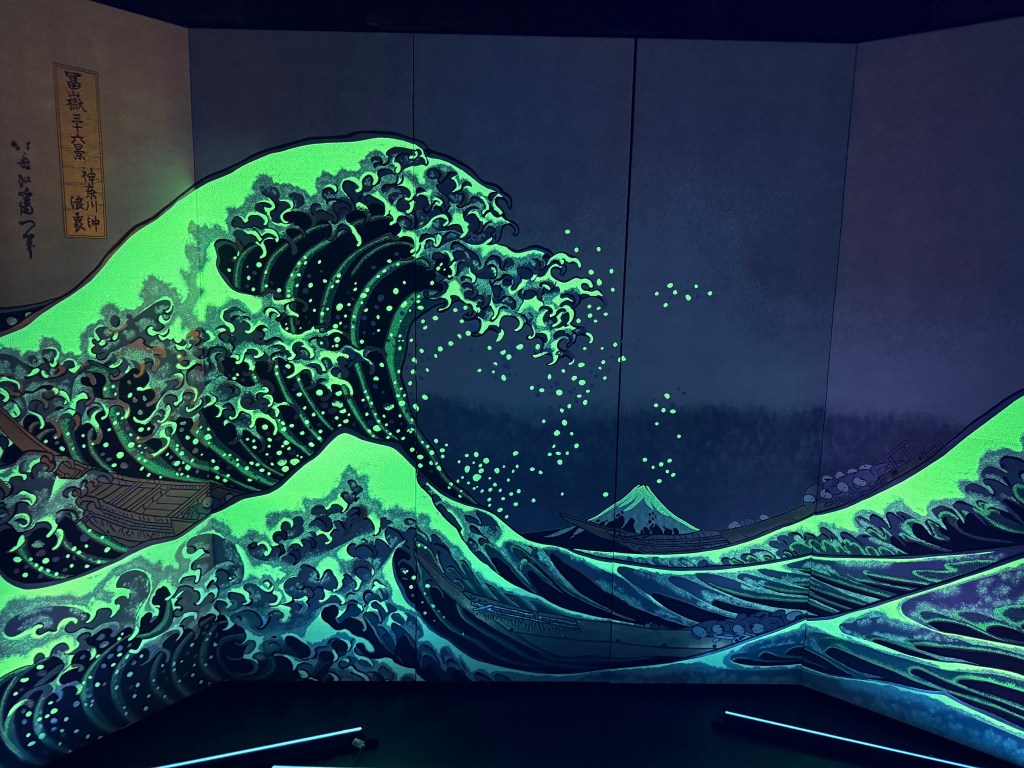
We started our tour of the city with a visit to the Nishijin Asagi Museum, which gave us some insight into how ancient Japanese artists used different techniques to depict their beautiful nation. We found ourselves to be the only people touring the diverse exhibitions, with the silence between our hushed conversation making the experience feel peaceful and made us feel more connected to each exhibit. As we wandered through the halls of woven silk tapestries, my classmate, Persia, who enjoys videography, found the lighting in some of these exhibits a great place for some photo ops, such as the glowing lantern exhibit, which you can see shown above. We both found the glow-in-the-dark exhibits extremely interesting, with Persia commenting that she had never thought to look at this kind of art in such a way. TVs throughout the museum gave us more insight into the process of creating some of these pieces.
After, we took a short walk to the Kyoto National Museum. We were drawn with signs advertising a Washoku Special Exhibit, which we have learned throughout this Dialogue is a major aspect of food culture in Japan. When we entered, however, we instead found ourselves in a small concert hall where an orchestra was performing. Myself and my classmate, Antonia, were both entranced by the skill of the musician playing a xylophone, which most are used to seeing in the classroom of an elementary school rather than an orchestra. What seemed like a relatively simple instrument was creating tones and pitches that I had never even heard before, and each note fit harmoniously with the backing piano and flute. This served as an incredible welcome to the museum, which was neighboring the concert hall.
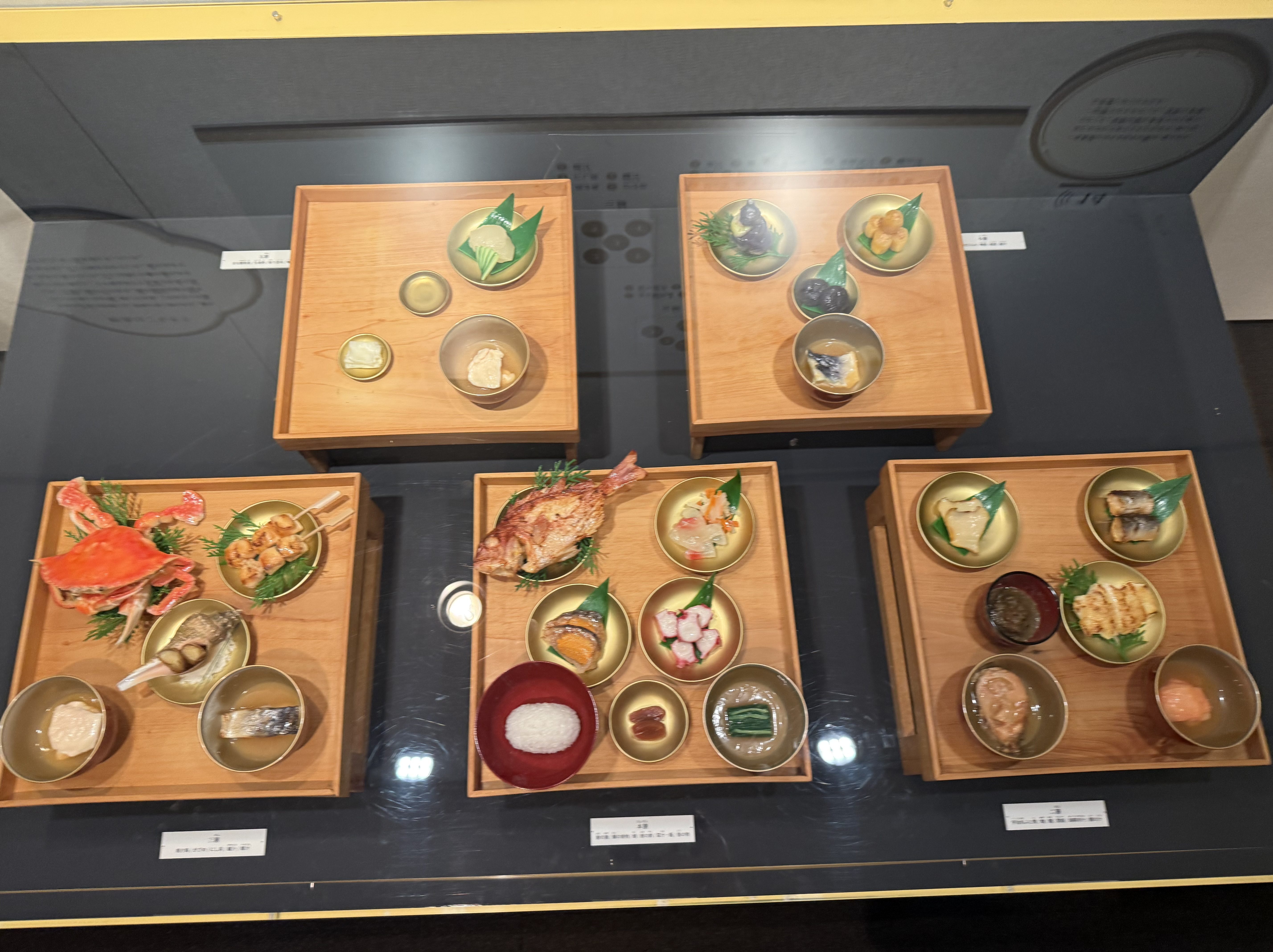
Given that we walked into this exhibit with some base-level knowledge, we found that we were more drawn to how the concept of Washoku came to be through the centuries of Japan’s history, through their emphasis on seasonality, local ingredients, and combinations of different flavors, colors, and methods of preparation. After staring at all of this food, along with the miles of walking through the museum, we found our stomachs begging for sustenance.
Walking down the side streets of Kyoto, we walked by ancient homes and shrines: buildings that seem to have been unchanged since they were built; some were charred on the sides from fires of long ago, yet they still stood. We stumbled onto a hole in the wall that led us up to a quaint cafe that bolstered antique furniture and a collection of music CDs that would rival that of any connoisseur, with titles ranging from jazz classics to 2000s-era American pop. The menu items here were mostly French and Italian, which came as a mild surprise and contrast from the usual Japanese that, to most of us, was completely unintelligible without the use of Google Translate. All three of us ordered affogatos and a small lasagna to share. After about an hour of great conversation and rich espresso poured over a heaping scoop of vanilla ice cream, we headed back to our hotel for some much needed rest.
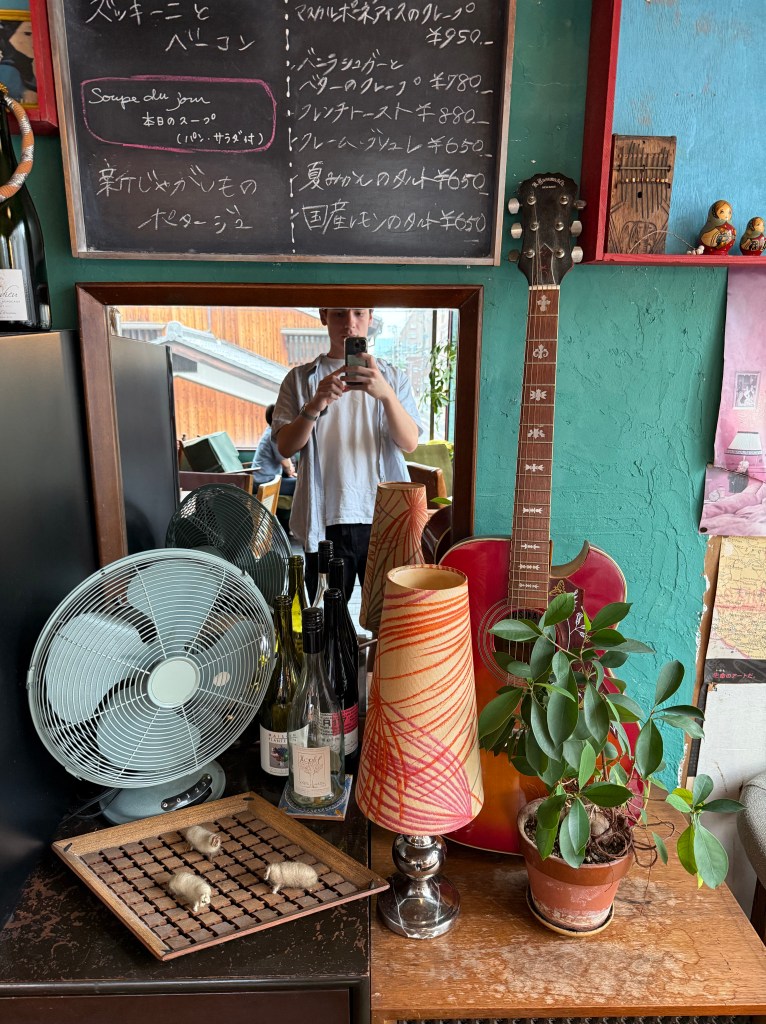
Today, we steered away from the bustling streets and brought ourselves back in time to see a side of Kyoto that not many foreigners are lucky enough to get to know. Being in Kyoto and Japan as a whole has been such an incredible experience as a whole and I cannot wait to keep having days like this one with my newly made friends. Thank you all for reading!
-Alex S


 Japanese Food Bites: Indulging in the Taste of Summer
Leave a comment