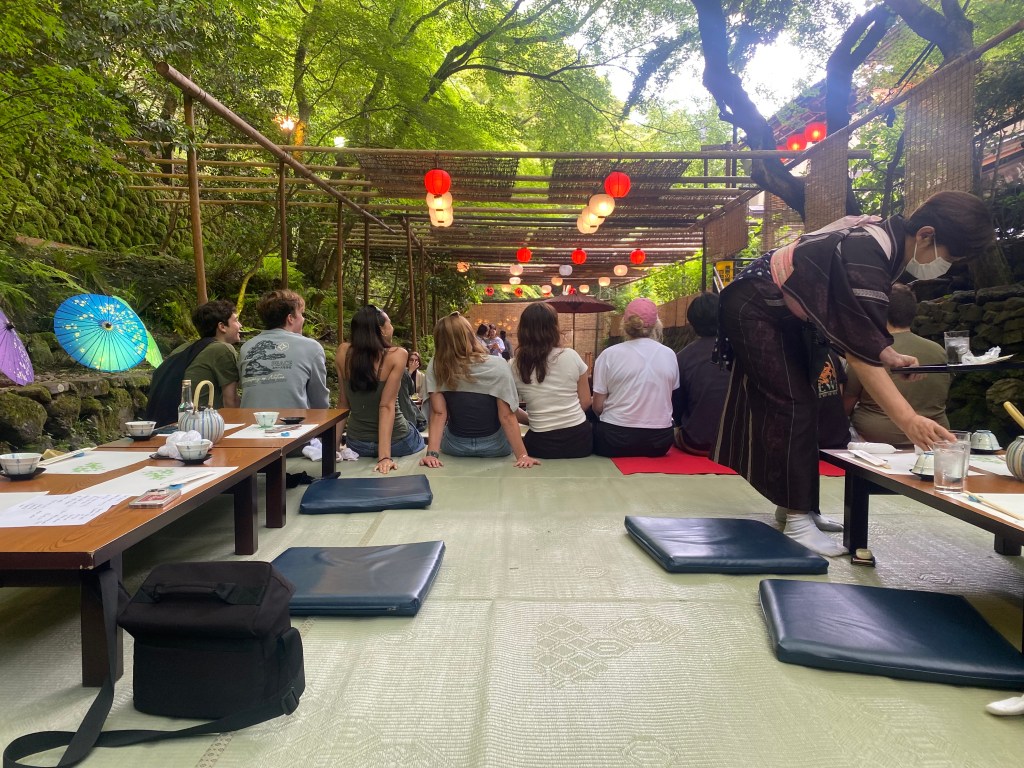
Bowls out! toes out!
It’s not everyday that you can dip your feet into an icy mountain stream while savoring a seven course kaiseki meal, but Kibune Nakayoshi in the small village of Kibune, Kyoto manages to create that unforgettable reality.
Kibune Nagayoshi is nestled in the mountains which made for scenic train rides to Kibuneguchi station where we took a bus up the mountain and walked for about ten more minutes to the restaurant. On that walk, you could see mini waterfalls forming from the Kifune river where the restaurant is located on top of. We also walked passed the Kifune Shrine which neighbored the restaurant and many others lined up along the way. When we arrived at Kibune Nakayoshi it looked like the many other restaurants and stores with its wooden frame and noren curtains at the door splaying the restaurant name, but across the main building you see multiple tatami-floored platforms over the river with bamboo roofs lined with lanterns. There sat happy customers lounging on plush pillows and dipping their feet into the river.
The scene was almost magical. The people reminiscent of forest fairies. I too wanted to be a fairy, one with nature, and listening to the water brushing past the rocks over the sounds of laughter and conversation. Our group was escorted to the tatami platforms by servers dressed in kimonos and were served kaiseki meals shortly.
Kaiseki is a multi-course traditional Japanese meal characterized by its focus on seasonal ingredients, meticulous presentation, and harmonious combinations of different flavors and textures. It is often considered the finest dining experience in Japan.
The first thing we were served was chilled green tea as well as matcha flavored sesame tofu topped with wasabi and and a goji berry. The texture was smooth and creamy. The wasabi added a kick.
The second course was sushi. Specifically sea bream and tuna presented on a perilla leaf that was buttressed by crunchy glass noodles. Some yuba (tofu skin) was also presented beside it and was topped with two yellow petals from which flower I don’t know. As someone who had barely eaten raw fish before this trip, I was not off put at all by the fish. It tasted of nothing and there was no fishy smell which boasts its freshness. I found that I quite enjoyed the texture of the sushi as well. I dipped the yuba into some soy sauce as the thin tofu skin didn’t really have a taste. However, I enjoyed it nevertheless.
The third course was a whole salted grilled sweet river fish displayed on a bamboo leaf. This fish is only caught during the summer months and is considered a luxury item as they can only survive in clean waters. Bamboo is also commonly found in Kibune. I was hesitant at first to eat the fish but I followed the advice of Summer who said “Just bite the head off.” And as I was biting the head off Kennedy said that eating the fish whole would make him feel like the superior mammal, mind you he is a vegetarian. Regardless of that comment, none of my fish went to waste and it was a delightful meal. Instead of the fish, Kennedy had vegetable tempura curated to his diet. He enjoyed every bite.
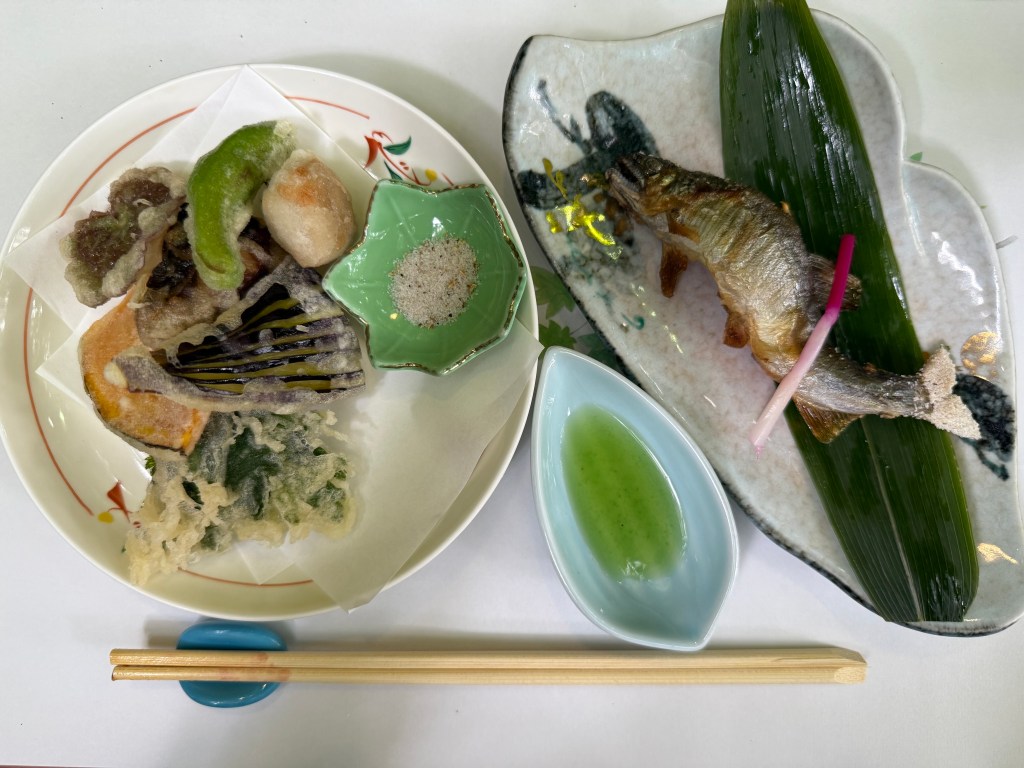
The fourth course was somber noodles to be dipped in broth, a shrimp, shiitake mushroom, and tomago tofu. The noodles were refreshing.
The fifth course was presented in a bowl decorated with bamboo leaves which is reminiscent of the bamboo present in the area. Inside the bowl was domyoji, a sticky rice ball filled with eel, white fish, ginkgo nuts, and shiitake mushrooms. The rice ball was in a pool of mushi, a thick brown broth that tasted like almost nothing.
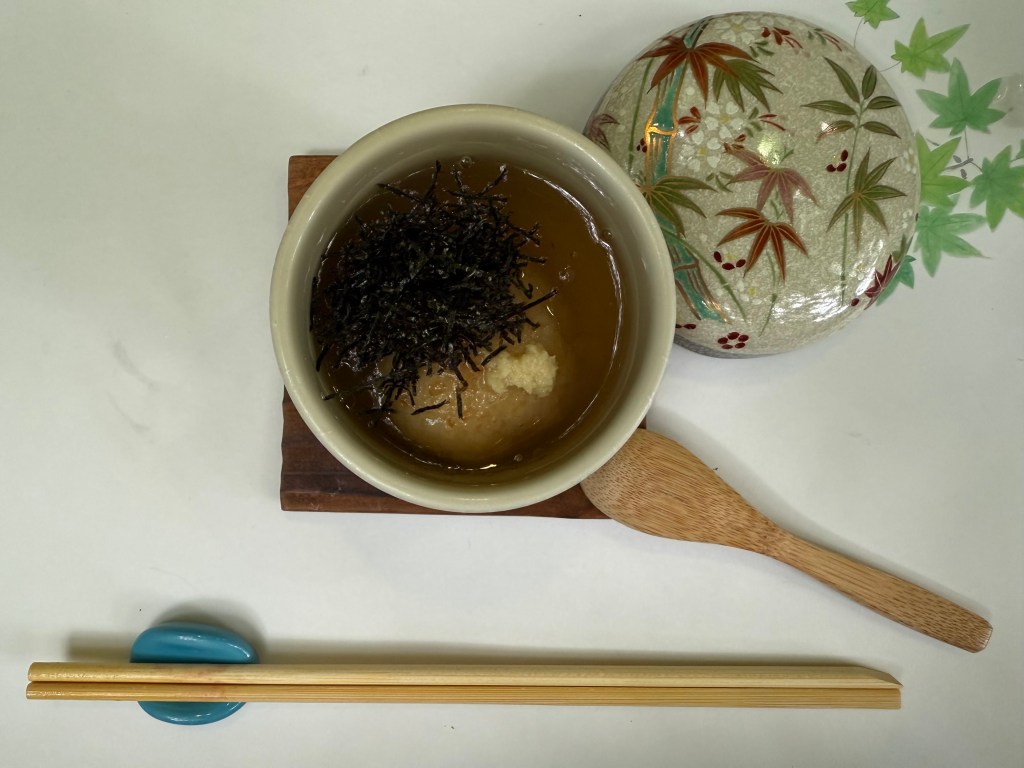
After the fifth course we were given fermented cucumbers and eggplant as palate cleansers.
The sixth course was rice with fish seasoning powder and miso soup which has a green tofu in it and small shiitake mushrooms. The seasoning made the rice more tasteful and the miso soup gave me much needed warmth after dipping my toes in the icy water.
The seventh and final course was two watermelon slices. Watermelon is of course in season and was refreshing.
To experience Japanese culture is to experience a kaiseki. I tried dishes I have never tried before and experienced the summer season through taste. I was immersed into traditional culture through the elegant setup and natural environment. The careful instructions of the kimono adorned servers displayed the Japanese sentiment towards food which is to eat with intention.


 Japanese Food Bites: Indulging in the Taste of Summer
Leave a reply to Jo Guarin Cancel reply