By Coco Sagoo-Jones
Eshaku, Keirei, Saikeirei: all forms of bows in Japan, each deeper than the other, each of more reverence than the last. A physical gesture that boasts Japanese emphasis on appreciation, humility, and acknowledgment, whether to people, animals, food, or sacred spaces. The bow is an undisputed everyday practice in Japan, no matter the destination, tying each event together, tightly, with a vermillion ribbon woven with respect.
Beginning the day at Ryukoku University, we greeted our buddies with an honest smile and a slight head bow. Casual greetings accompanied by small bows, Eshaku, saying I see you and I respect you. It becomes a mindless practice after spending a couple days in Japan. It’s a habit deeply ingrained in social interaction and one that carries from Konbini registers, train platforms, and hotel lobby workers.
Lunchtime took us to Kinchan, a small Chinese restaurant offering a quiet detour from the usual Japanese fare. Sat amongst uniformed school kids out for lunch, I ordered a tray of Chinese ramen, crispy golden gyoza, and rice which arrived with two slices of crispy buttercup yellow daikon radish on the side.
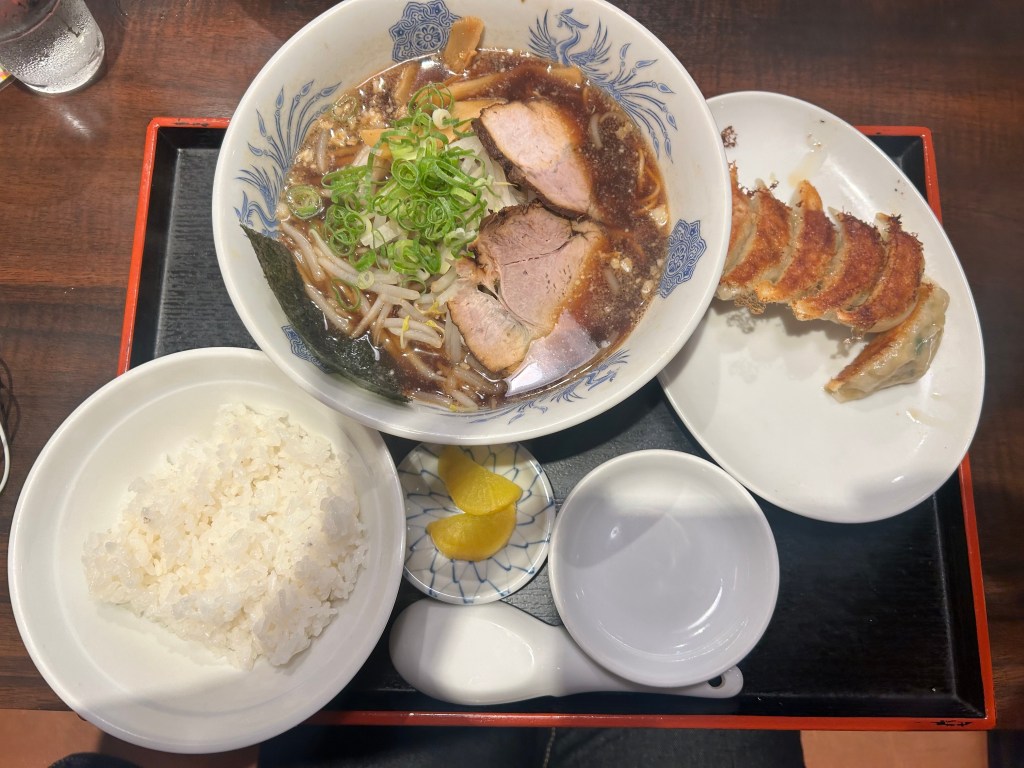
Though now iconic in Japan, ramen originated from Chinese immigrants working in Japanese soba shops and creating a dish infused with both cultures’ practices. The name comes from the Chinese dish and word Lamian which unfolded into something uniquely Japanese over time. The bowl of deep amber broth was adorned with a lattice of bean sprouts, a generous portion of irreplaceable marinated bamboo shoots, three slices of marinated pork belly or Chashu pork, and a gentle scattering of spring onions. It was immediately obvious that the spice infused broth was different to the typical Japanese style broth. Rich, dark, smooth, it was the perfect combination for the traditional Chinese noodles which are made with eggs instead of Kansui, the alkaline solution used to make Japanese ramen noodles, making them softer and more delicate than others.
Even here, the chef gave a polite nod as we thanked him for the meal, and we nodded back instinctively. Along with the people that provide it, food is honored in Japan. Meals aren’t just consumed; they are respected. Beginning with itadakimasu, to humbly receive, the small bow of gratitude is to thank even the plants and animals that are served before us.
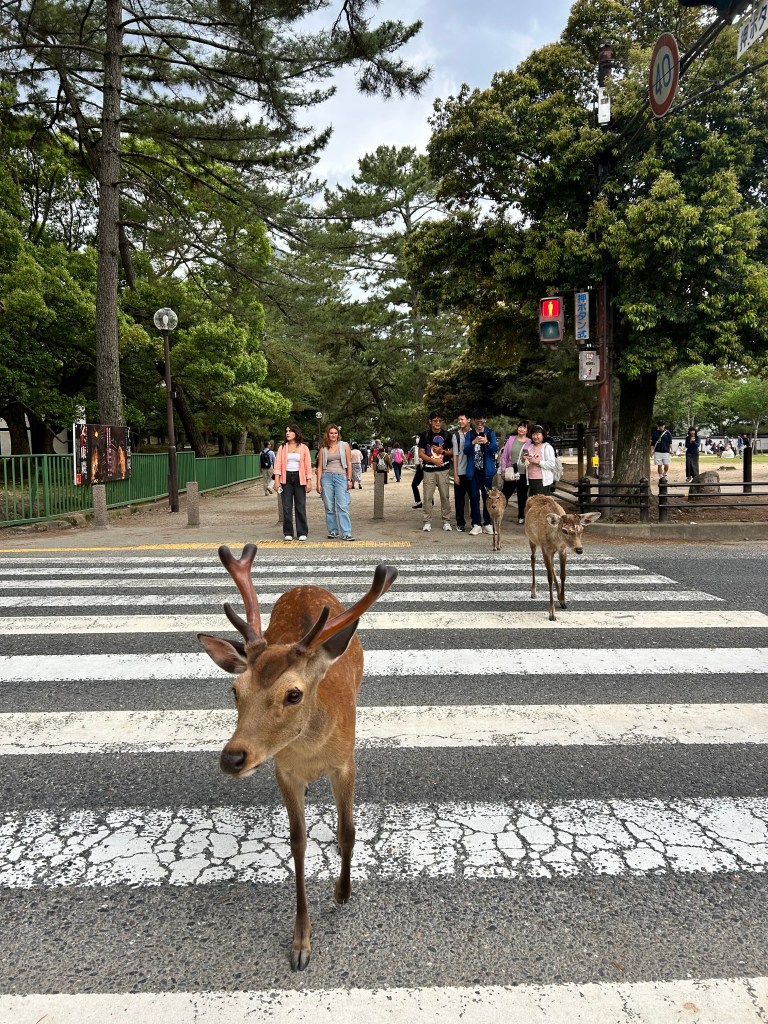
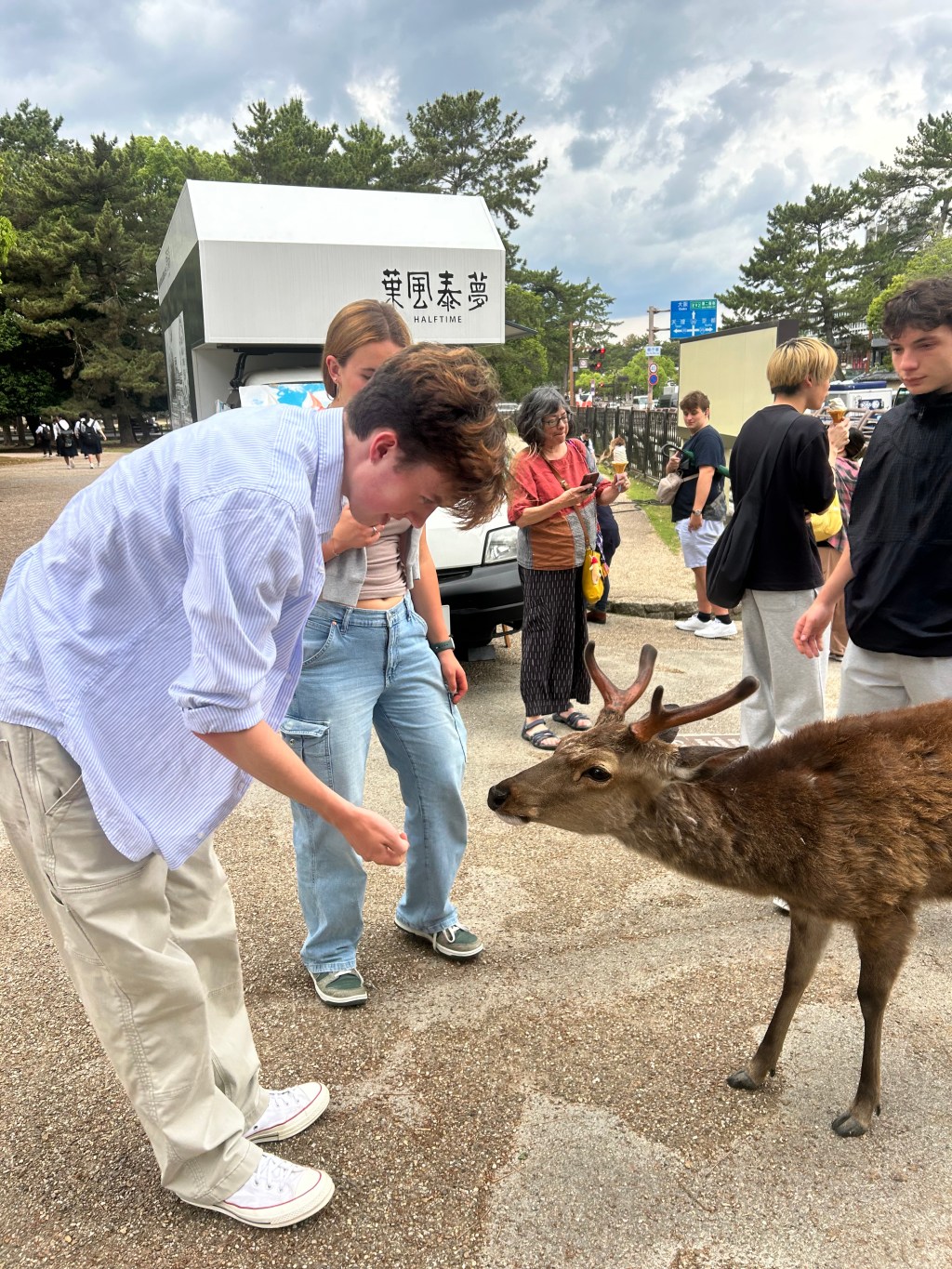
The heart of the day was our trip to Nara Park, home to over 1,300 wild sika deer. These deer are living symbols of spiritual protection, believed to be messengers of the gods from nearby Kasuga Taisha Shrine. As you approach deer to feed them moon shaped rice cakes or alternatively ripped up ginkgo leaves, they bow. A subtle dip of their head, sometimes hesitant, sometimes comically exaggerated, and sometimes with a slight shaking motion. A gesture not of reverence, but of persuasion. They’ve discovered that bowing increases their chances of receiving crackers from tourists. We bow back, Keirei.
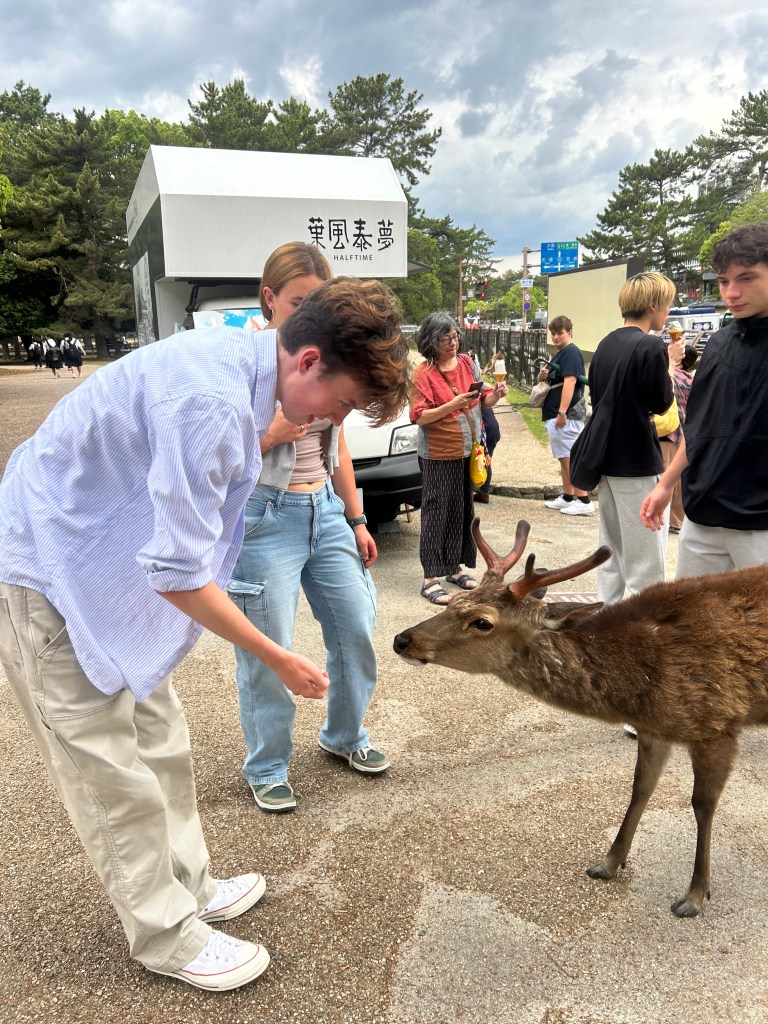
It’s surreal to share a cultural gesture with another species — let alone the bow, one that feels, to me, to be so intentional and personal. In this sense, the bow has become a strange but touching bridge between the wild and the civilized.
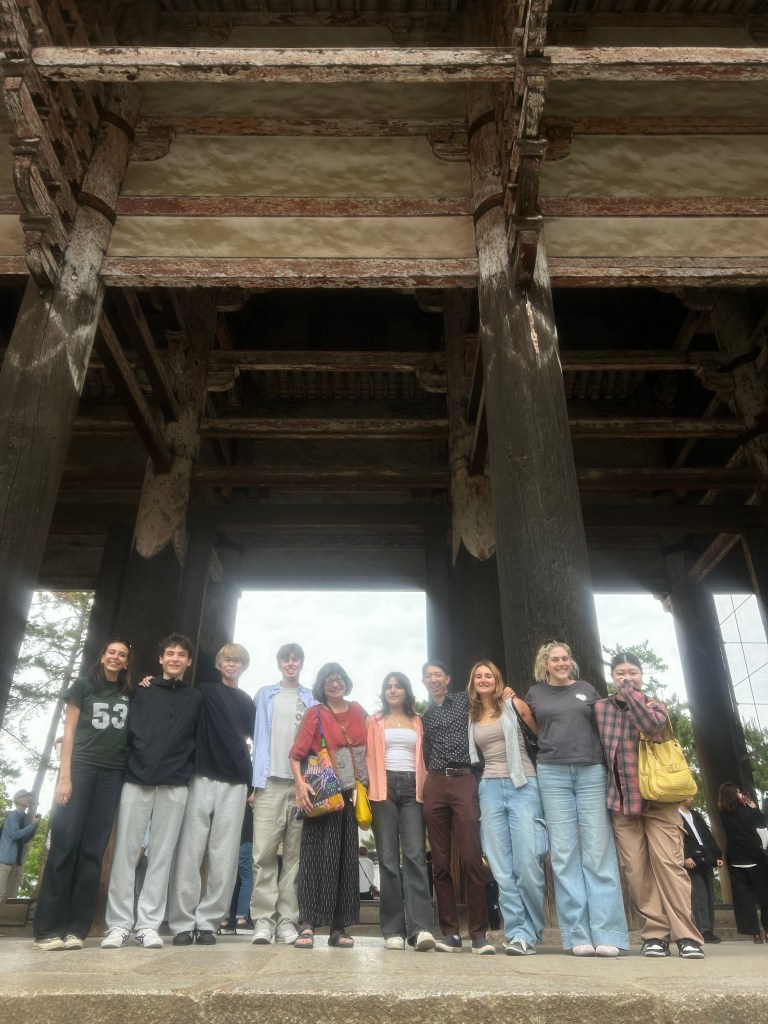
We then walked to Todaiji Temple, an undisputedly startling monument. Founded in 728, the temple is home to Japan’s largest bronze Buddha which has since been victim to a multitude of earthquakes, fires and attacks. As we approached the great Sanmon gates, we followed tradition of bowing at the side rather than walking through the center which is reserved for the gods. A bow at a temple, Saikeirei, is a bow to time, to divinity, to the long history of belief, whether you chose to believe or not.
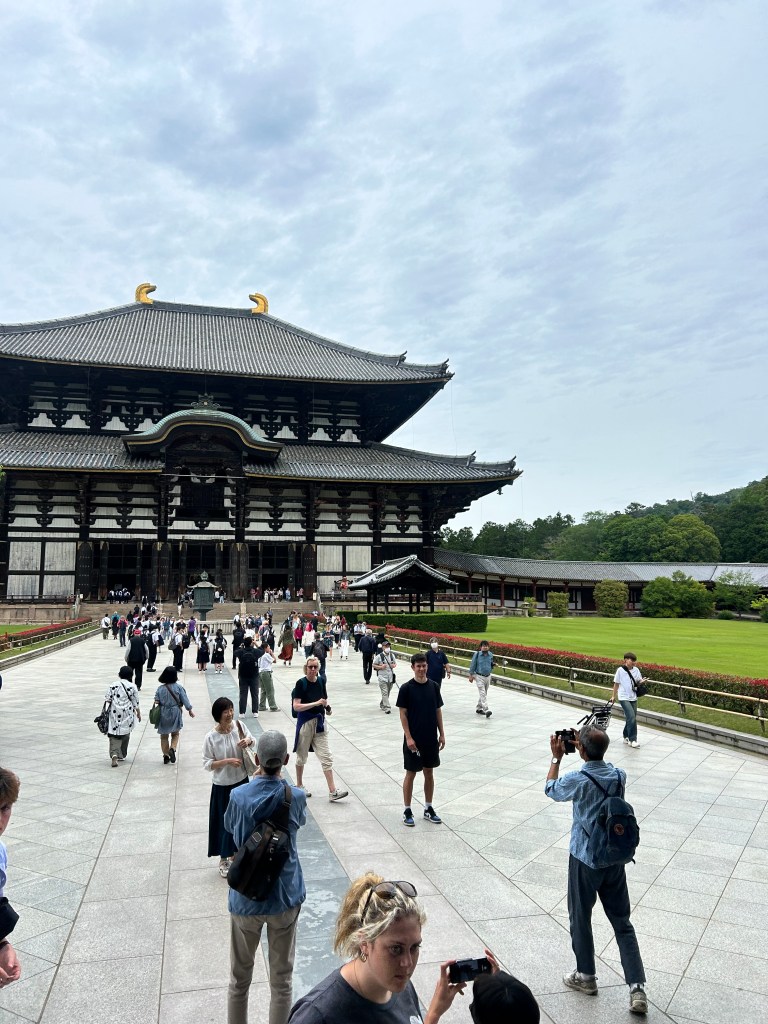
Inside, we clap our hands to call the spirits and bow in prayer — each of us with our own wishes. A communal act of vastly personal moments.

After returning to Kyoto, we ended the day with karaoke as a celebration of our companion Sora’s completed thesis and his ultimate display of discipline. Karaoke is part therapy, part celebration, and all heart in Japanese culture. We took turns singing, laughing, and cheering each other on.
Bowing is a language of its own. From slight nods in the classroom to the full-body bows at temples, from deer imitating humans to showing respect to our meals, Eshaku, Keirei, Saikeirei speak volumes. If Japan has taught me one thing, it is that respect is a form of regarding and appreciating. As we turn in for the night, coming back to the hotel and bowing one final time to the receptionist, we are reminded that respect can be found all around and is embedded in passing and in prayer.


 Japanese Food Bites: Indulging in the Taste of Summer
Leave a reply to Beth Hastie Cancel reply