I believe I can speak for every member of the program in expression admiration, gratification, satisfaction, really all of the positive ‘tions’ when it comes to this study abroad. From students who’d never set foot outside of Asia, to those make their third or fourth forays into the Land of the Rising Sun, we all came to Japan in May with open ears, ready eyes, and hungry mouths. And we were not disappointed.
Our first week saw us starting off strong, and certainly hitting the ground running. An inaugural speech with the esteemed Elizabeth Andoh-Sensei, renowned culinary author and Japan food expert, enlightened us to the refined sensibilities and delicacies of Japanese cuisine, encompassed by a single term that we would subsequently commandeer throughout the trip, “Washoku“. Next was a lecture with Yukari Sakamoto-san, another speaker beyond-knowledgeable in Japanese food, who armed us with tasty recommendations to peruse through in our quest. Follow that up with a trip to the Megmilk Factory in Chiba, where we learned the production process behind one of Japan’s biggest dairy product manufacturers, and you can see the recipe we’ve been tailoring to expand our gastronomic knowledge.
After this expedition came a return to the classroom, where our Ochanomizu Lecture Circuit was completed with pizza-extraordinaire Brandon-san, joined by his wife Kulumi-san and their cute newborn. Brandon educated us on various aspects of Japan, including its relationship with rice, the education system, and how industrialization affected the country. What perhaps stood out most however, was Tiga, a concoction of vegan pizza tinged with Japanese ingredients, giving it an amazing, distinct flavor.
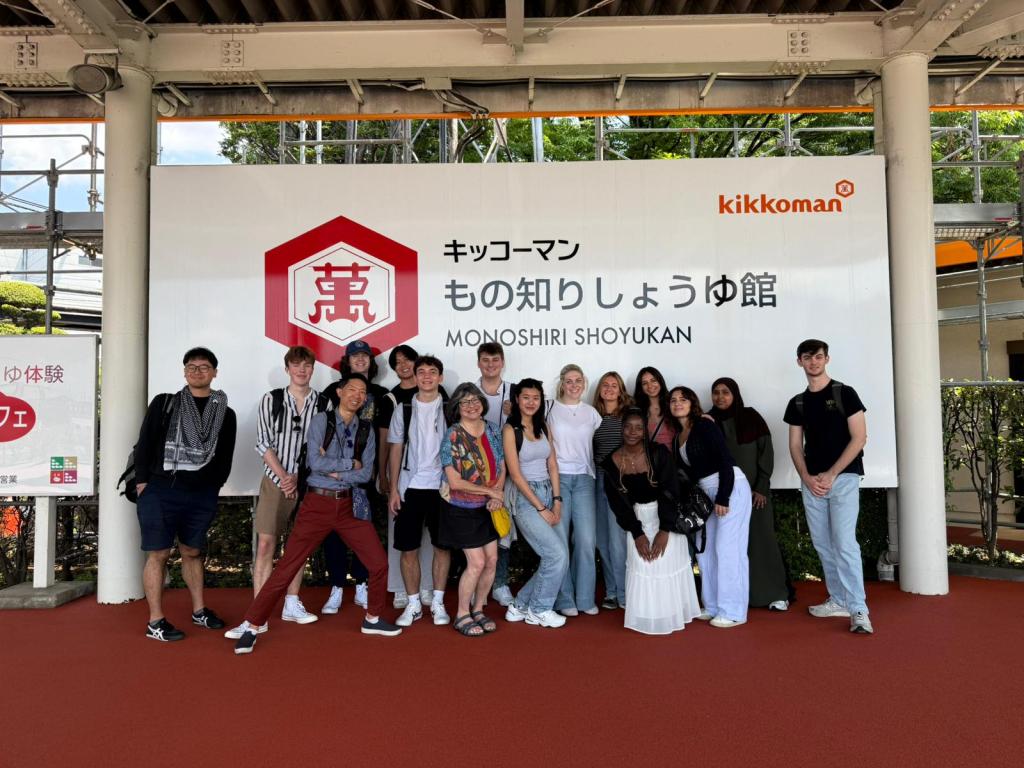
Then, with the lecture circuit complete, continued Tokyo’s own expedition circuit, which saw us traveling between the Kikkoman Soy Sauce factory, the Sakura Mushroom Farm, a local Tokyo Miso Farm, and the oft-sought Ginza prefectural antenna shops. Those Kikkoman and Miso experiences both served as the eye-opening moments of revelation regarding the power of Japan’s national legume, the soybean.
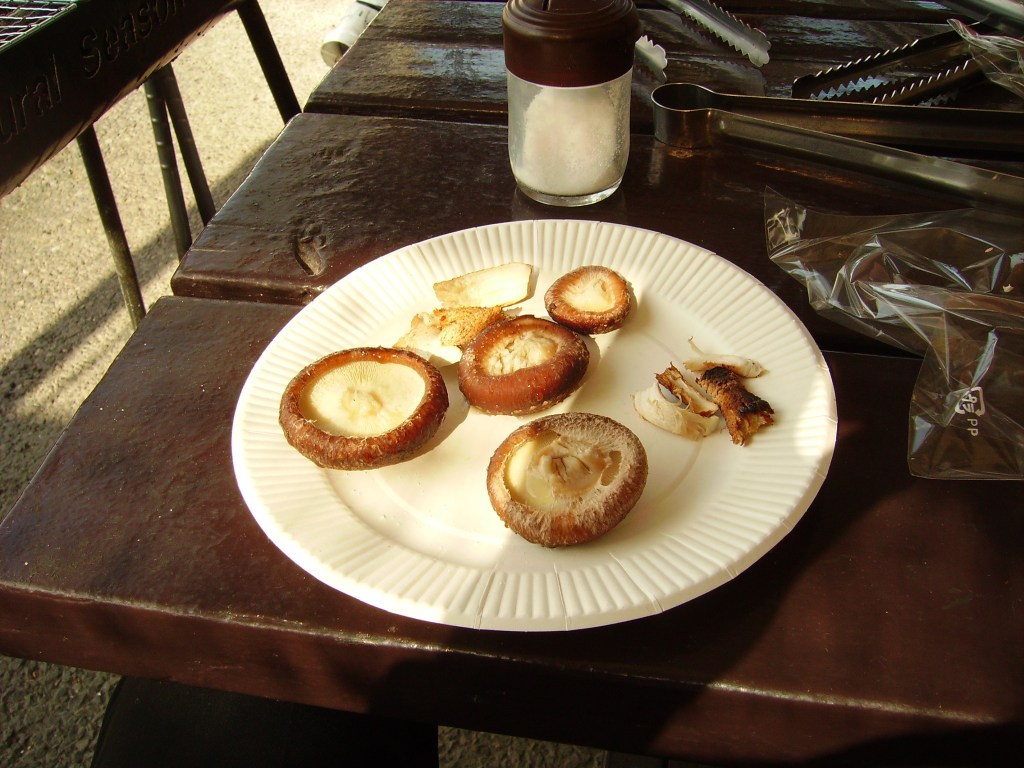
Meanwhile, the Sakura Mushroom Farm gave us our own farmer-for-a-day experience, picking and grilling our own mushrooms, a feeling which relayed both the tiring work and tireless joy of growing your own food. Those prefectural shops worked similar wonders, illustrating to us the breadth and depth of Japan’s culinary history, with how distinctly it varied even in the short miles between prefectures. That served as the closer of our first Tokyo block, but it could hardly be said that we were done. The first leg taught us Washoku, taught us to see it in the day-to-day meals we ate, and gave us many firsthand experiences seeing the sheer work that goes into this lifestyle, at each step of the food chain.
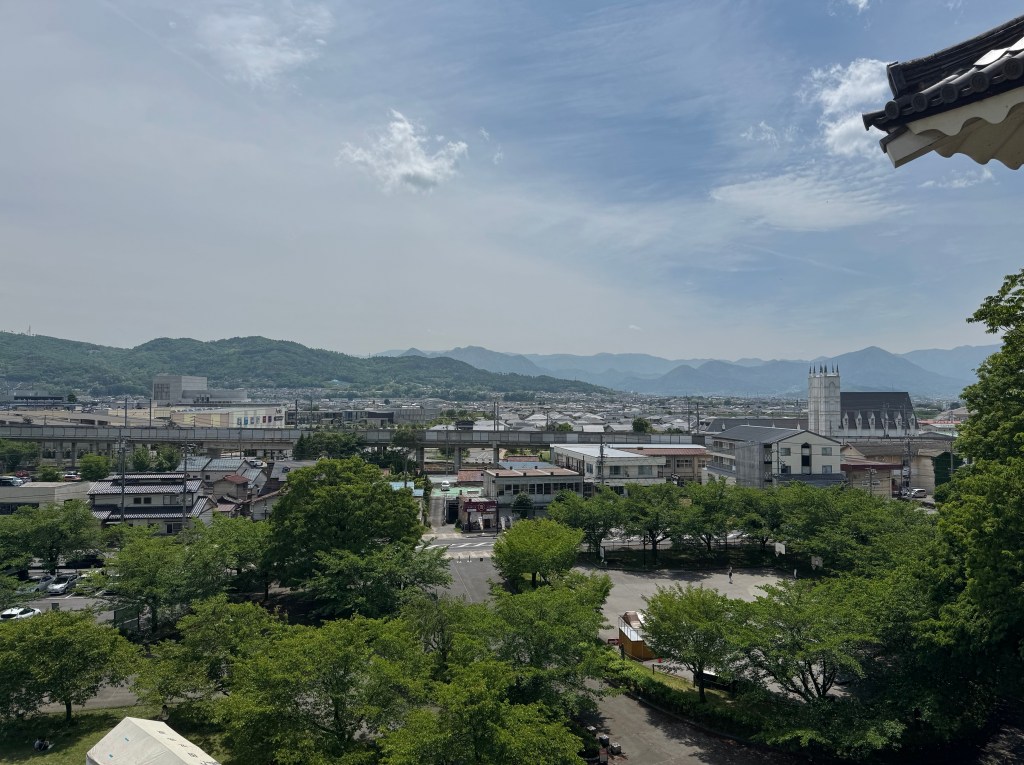
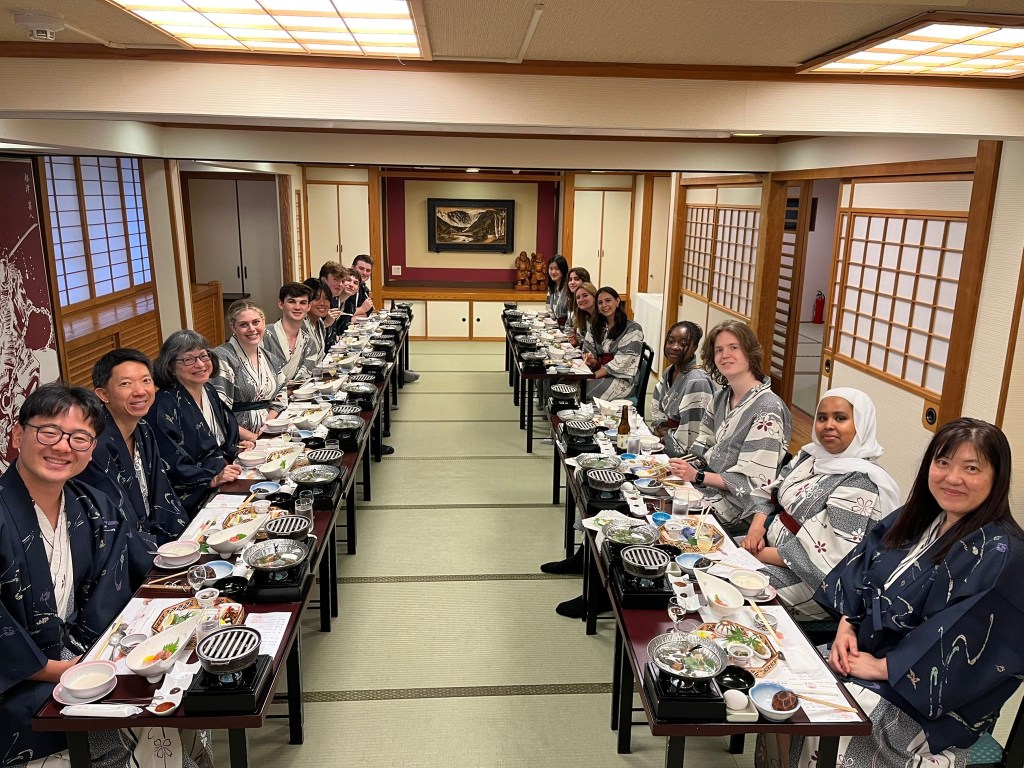
Next began a rapid-paced and exciting leg of the journey: From the high mountains of Ueda, to the low beaches of Kurobe, at the cozy Bessho-Onsen in-between. This began a trend of one of Japan’s more stomach-filling traditions: the Kaiseki. A day in Ueda, exploring the famed and idyllic Ueda castle, ended with our stay at the Besho-Onsen Ryokan, a traditional Japanese inn. Slacks were swapped for Yukata, belts for Obi, socks for Tabi. Dressed up in comfortable authentic garb (complete with a loose fitting Haori jacket), we were ready for the Kaiseki, a multi-course meal complete with many of Japan’s national delicacies. Sashimi, Tempura, rice, soy sauce, grilled meats, we had it all. And somehow, we had to do it again the next morning. (Some managed, some didn’t),
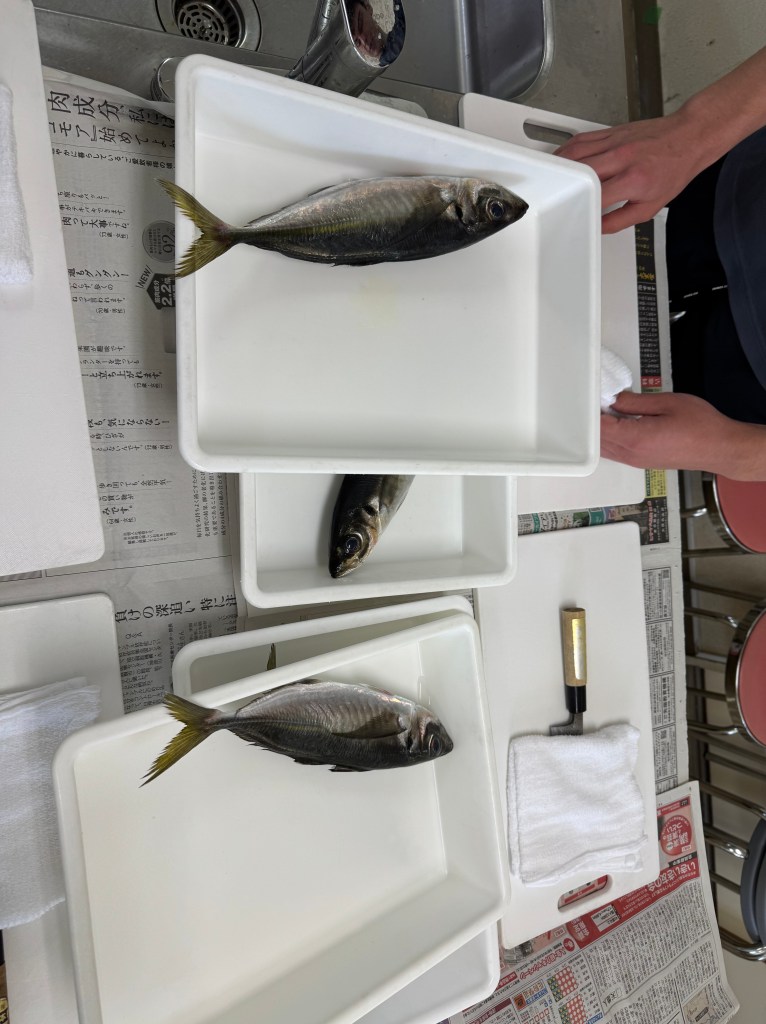
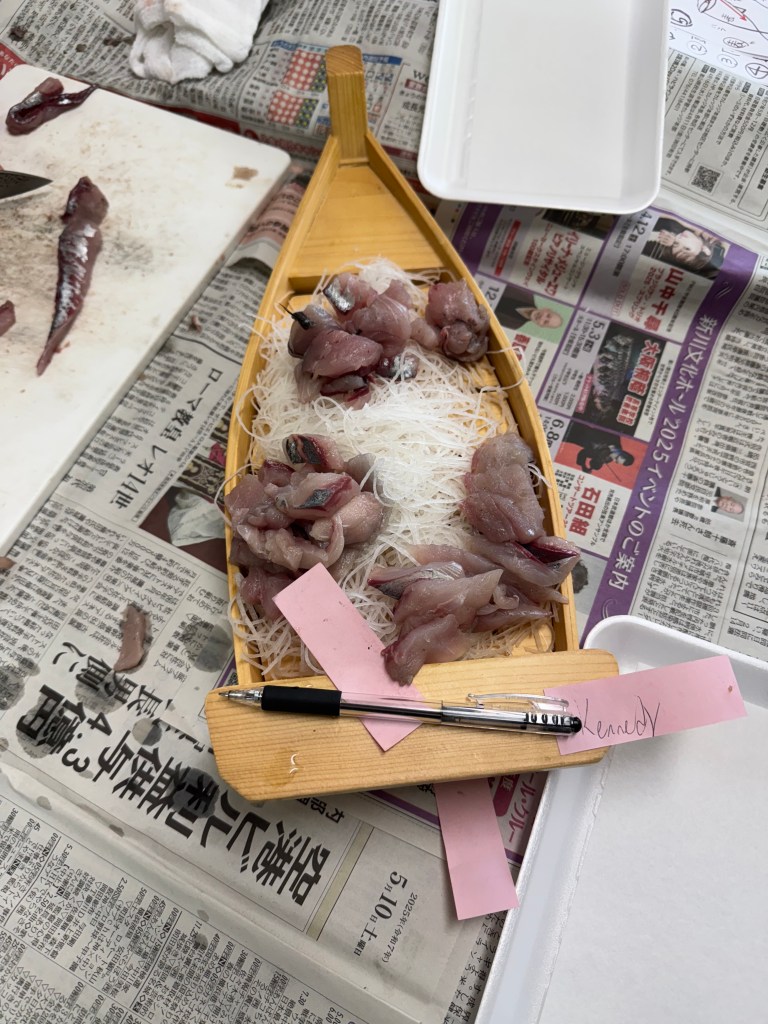
Then, our travel back to Ueda was set. There, we enjoyed a lecture from Tomo-sensei on the unique nature of Japan’s rice and how that came to be (Amylopectin, I love you). Afterwards was a cross-cultural exchange with students at the university, and we were then off, to our Sashimi class in Kurobe. There, with demonstrable effort, we attempted to not make fools of ourselves in eyeshot of the local news, who decided to pick up the story of foreigners coming to practice Sashimi at a small coastal town. It went…alright.
With that three day stretch complete, we had finally landed in the most well-known spiritual city in Japan—Kyoto. We were immediately warmly welcomed by students of our partnering Ryukoku University, who shared with us Japanese treats and an exchange of knowledge. There we continued for a few days, an educational period where we were able to refresh and broaden our knowledge even further on Biology and Writing, the two focal points of our study abroad. Then came even more excursions! Because Kyoto had so much to offer, trying to cover it all in the 10 days we were there was a woefully difficult task, leaving us only the creme de la creme, the cream of the crop, the best of the best to seek out. So, what did we do? Well…
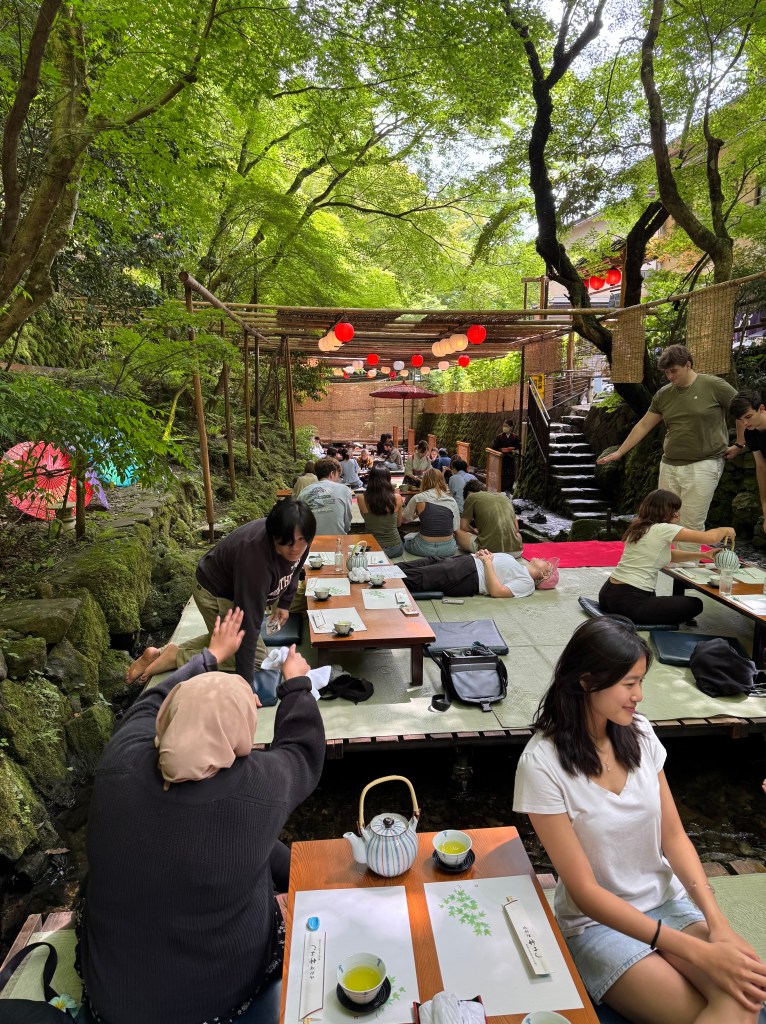
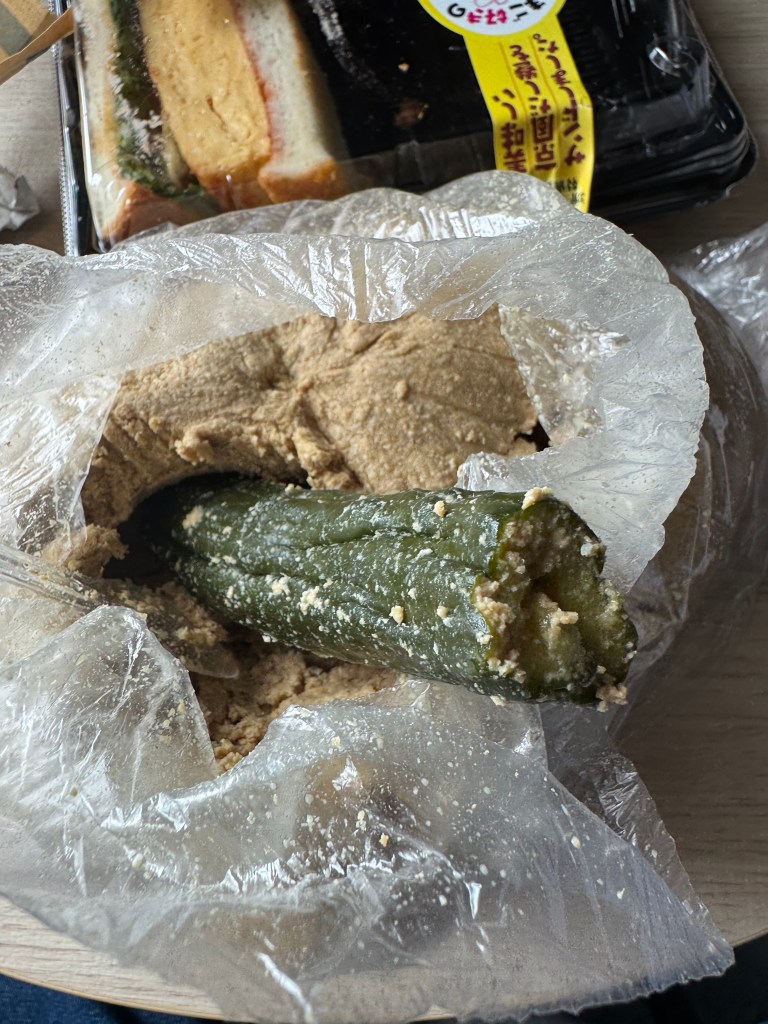
A lovely waterside Kaiseki, of course! Our second Kaiseki proved certainly lighter than the first, complemented by the beautiful scenery surrounding us, and seasoned with the light air only our high-altitude accommodations could provide. Being in the mountains of Kyozuke only continued to open our minds to the sheer beauty of Japan’s countryside. Continuing with that countryside exploration was our travel to a pickle factory, where we had the opportunity to pickle our own cucumber!
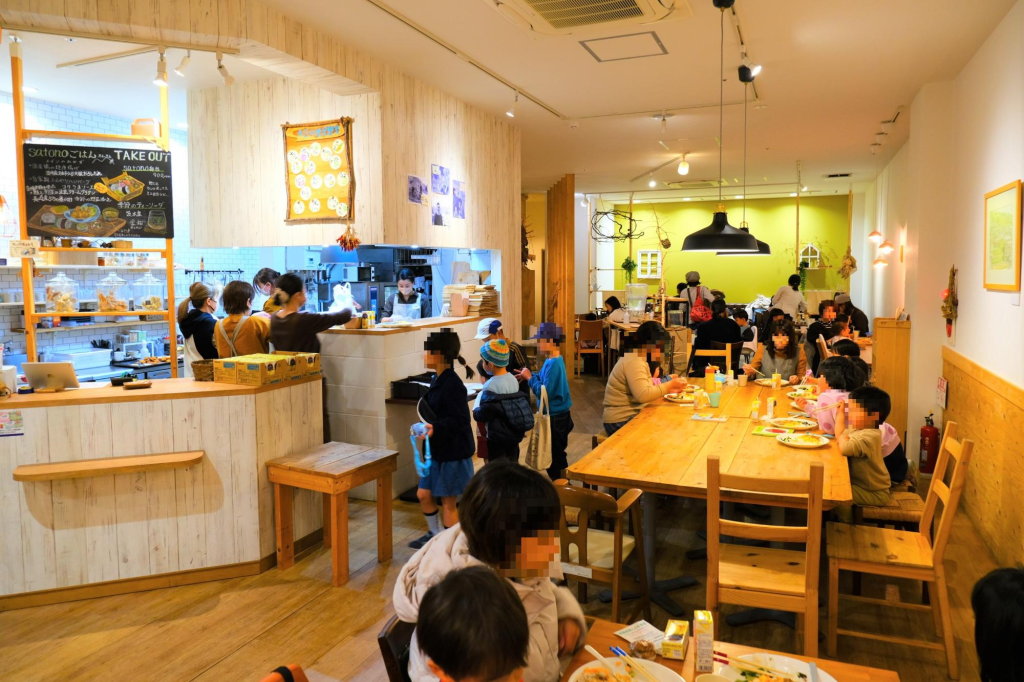
A trip to a suburban buddhist temple provided us a broader insight into Japanese culture, and the pockets where some may fall, unheard. The head of a Kyoto Kodomo Shokudo shared with us her own mental health struggles in a country not yet adequately equipped to handle such important healthcare concerns, and how her opening the institution helps to combat this, and heal.
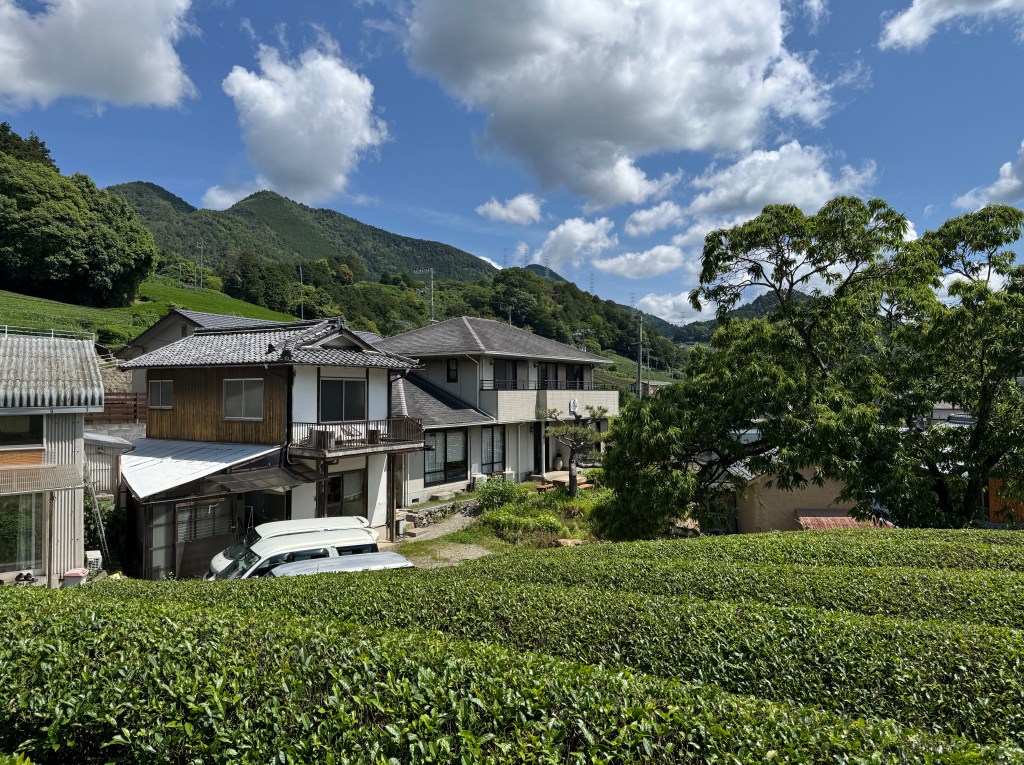
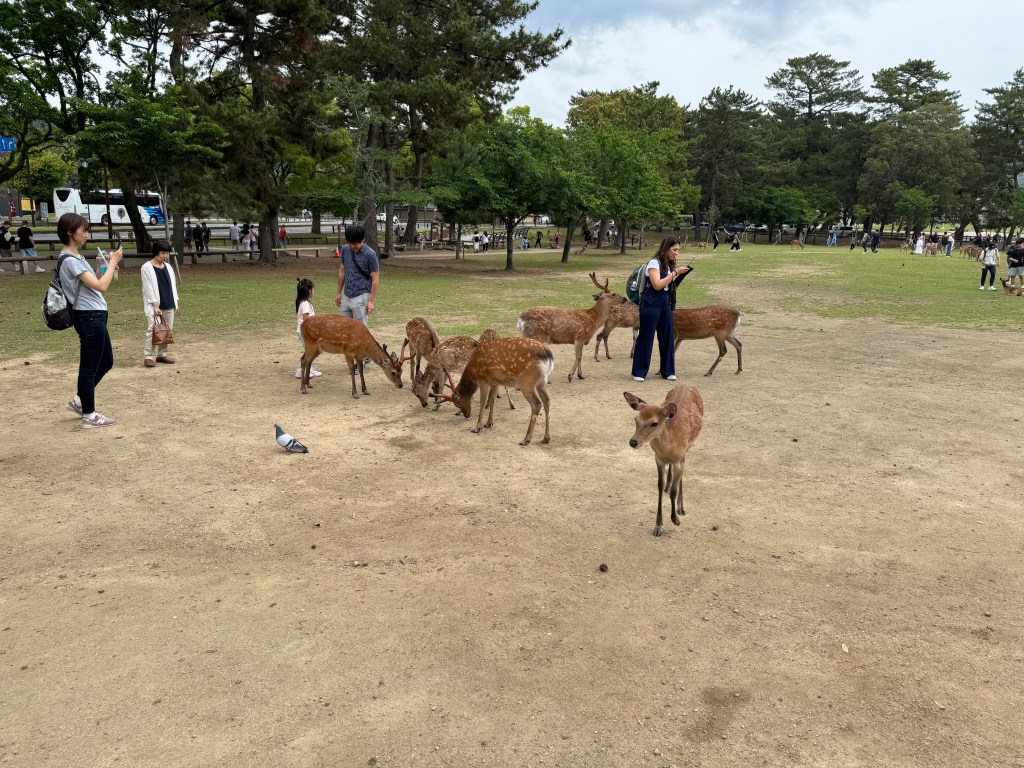
Our next two excursions fall under what perhaps would be considered the most enticing portion of the trip—A trip to a real tea farm (including of course, matcha), and a trip to Nara, home of the famed Nara deer. Safe to say, they both speak for themselves…
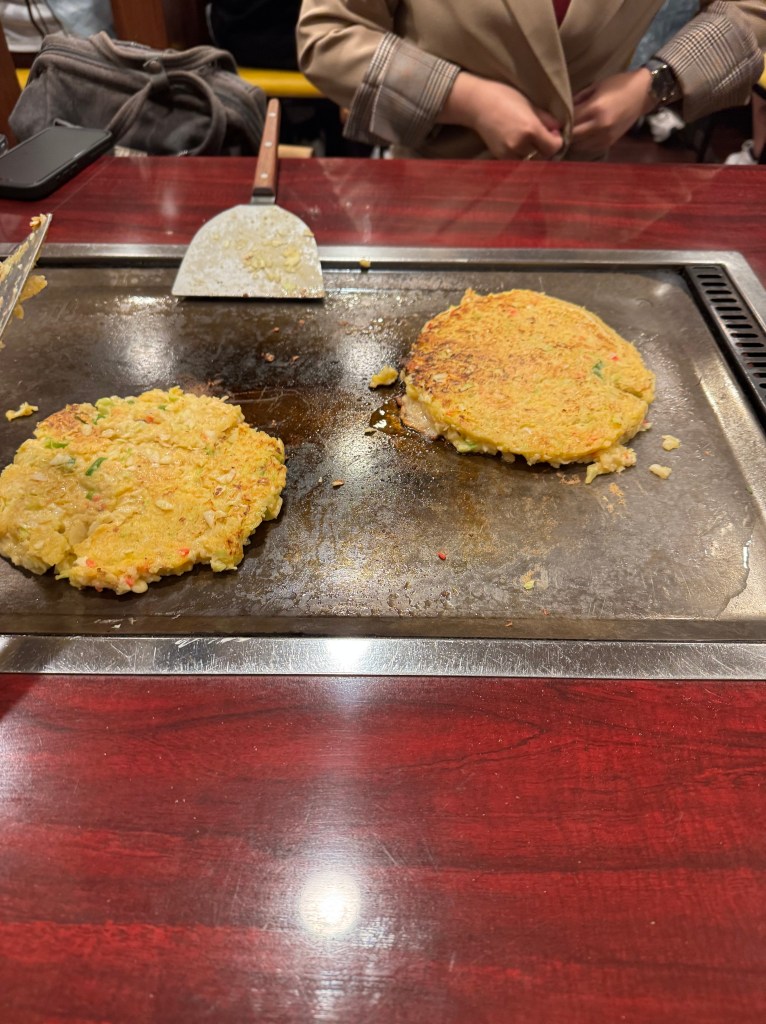
Our last stop in Kyoto, before closing the trip out, was to Osaka, where we learned to make Okonomiyaki, a grilled egg/cabbage/bacon/mayo/anything-you-want dish that grew into itself after WWII. Serving as my personal favorite food of Japan, our Kansai-style Okonomiyaki somehow managed to tick all five of those Washoku tastes with its rich blend of diverse ingredients, cooked up in a deliciously oily way.
Then, we returned to Tokyo. Our final days were spent in a mixture of final exams and final presentations, testing both our knowledge gained while here, and our ability to share it with our peers. It served as a good primer for all of us, as we went back to our homes, knowing we’d be able to adeptly educate the uninformed on the intricacies of a Japanese diet. We learned Washoku from Day 1, the importance of the 5 colors, the 5 flavors, and the 5 preparations. We learned the importance of regionality in cuisine through our antenna shops and trips to local farms (Sakura Mushroom, Miso), and the importance of nationality throughout our trips to the large factories Kikkoman and Megmilk. We learned of how the setting could impact the meal (Ryokan, Kyozuke, Ueda Castle, on and on and on) and the beauty of a multi-course meal where each dish leaves you whet with anticipation for the next (Besho-Onsen, Kyozuke, Shibuya). We learned of Japan’s shortcomings in education and social safety, and the efforts of individuals and institutions to combat that through food (Brandon-san, Kodomo Shokudo).
We learned a lot on this trip, enough that I think we’d be leaving any other Northeastern Dialogue in the dust (no hate, only facts) but—the one inevitability creeping over all of us near the end of the trip, as we said our speeches, remarked on all that we’d miss (I’m still not ready for American Seven-Eleven…) and gave hugs out like they were the last we’d ever give—was saying goodbye. It’s not an easy thing to do. The best thing, I think, then, that food has taught us on this trip, beyond all of what I’ve mentioned, beyond all of what we’ve experienced and all of what we’ve tried to put into words, is that tried-and-true aphorism—the kind that only shows its sturdiness when broken in like a pair of new shoes—’Food is Memory‘.
So, to any future readers of this blog, to any that may want a taste of what we experienced, the friendships we made, both with each other, and with all of those who helped us out while we studied abroad—Go out, eat some Japanese food. Get a little soy sauce, maybe try natto again, gorge yourself in mochi and highballs, in katsu, ramen, sashimi, and the endless other dishes that have earned this country international esteem, and national pride.
After all, we’ve all learned that it’s your best way to remember what you did here.

 Japanese Food Bites: Indulging in the Taste of Summer
Leave a reply to Jared Young Cancel reply