Saturday, May 16th, was a warm and sunny day, making it the perfect temperature for a trip to Sanja Matsuri, Tokyo’s largest traditional festival. Sanja Matsuri is a three-day festival that occurs in the heart of Asakusa at the Sensō-ji Temple. Sanja Matsuri transforms a quiet and old temple into a vibrant party featuring traditional performances and street celebrations.
My friends and I were walking to the festival when we heard echoing chanting from down the street, which caught our attention. Following the sound, we found crowds of people watching, clapping, and encouraging a group of men in what appeared to be a yukata carrying a shrine. The men bounced and paraded the street with this portable shrine. The encouragement from the crowd, paired with the men’s labor, was truly a sight to see. Intrigued by the sight, we asked Sora-san what was happening, and it was a procession. The men were holding a “mikoshi,” a portable shrine that serves as a vehicle for a local deity to bring good fortune and blessings.
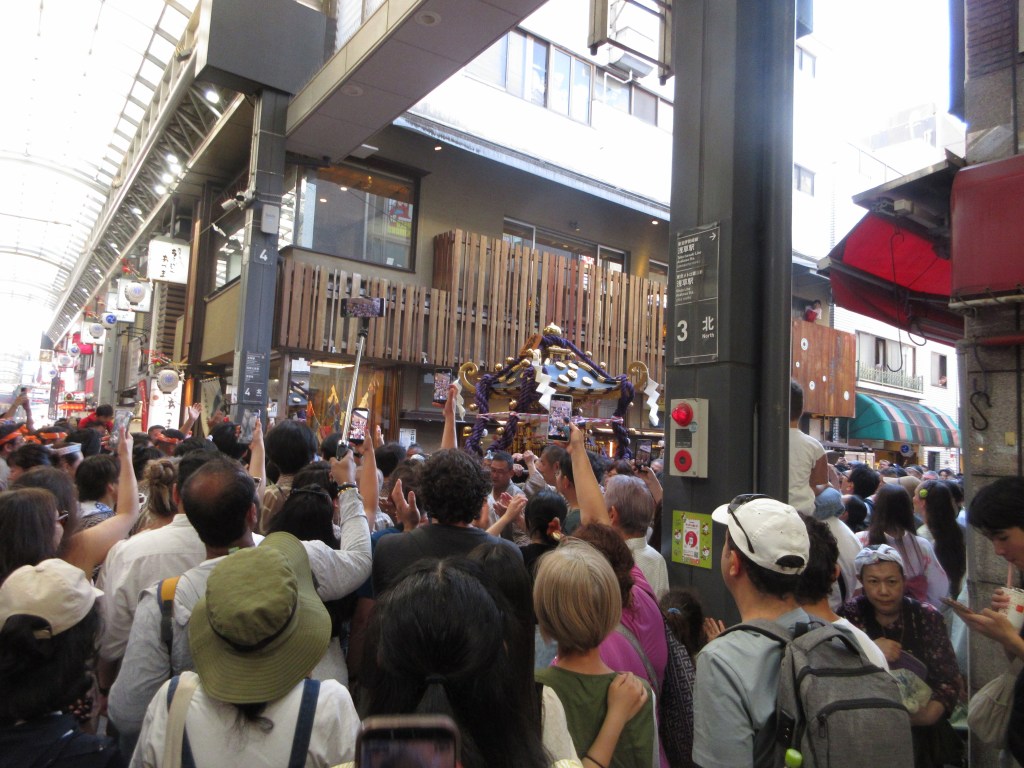
After experiencing that, it only fueled our excitement for the festival even more, and we moved to the main area, the Sensō-ji Temple. The temple was surrounded by hundreds of bustling food stalls and people. The air was filled with sweet and savory smells and the chatter of goers. We wanted to have a snack before fully exploring, so we tried tanghulu. I got the orange flavor, and it was pretty good. The candied orange made it crunchy to bite but sweet to eat. However, it would be better if it were cold as it started to melt, and an orange is better cold.
After visiting the food stalls, we wanted to explore more of the festival. There were many rituals to participate in. My friends and I drew fortunes from wooden boxes, prayed at the temple, and washed our hands with blessed water. Colorful shops selling all assortments, from chopsticks to hairpins, lined the paths we walked, while the smoke from the beef sizzling on the grill filled the air.
After exploring, hunger quickly approached. One of my friends was craving katsu curry, and we tracked down a nearby restaurant that served it. The restaurant was tucked away and was so small that our group had to split in half. My katsu curry arrived golden-brown and perfectly crispy; the crunch of the cutlet went well with the smooth rice. Claudia, a fellow student, also went, and I asked her about how she felt about her food. She got pork cutlet curry, and it was served perfectly; it was savory and not too hot. She said the food was enjoyable; the small atmosphere felt homey, and it was exactly what she needed after a long day of walking.
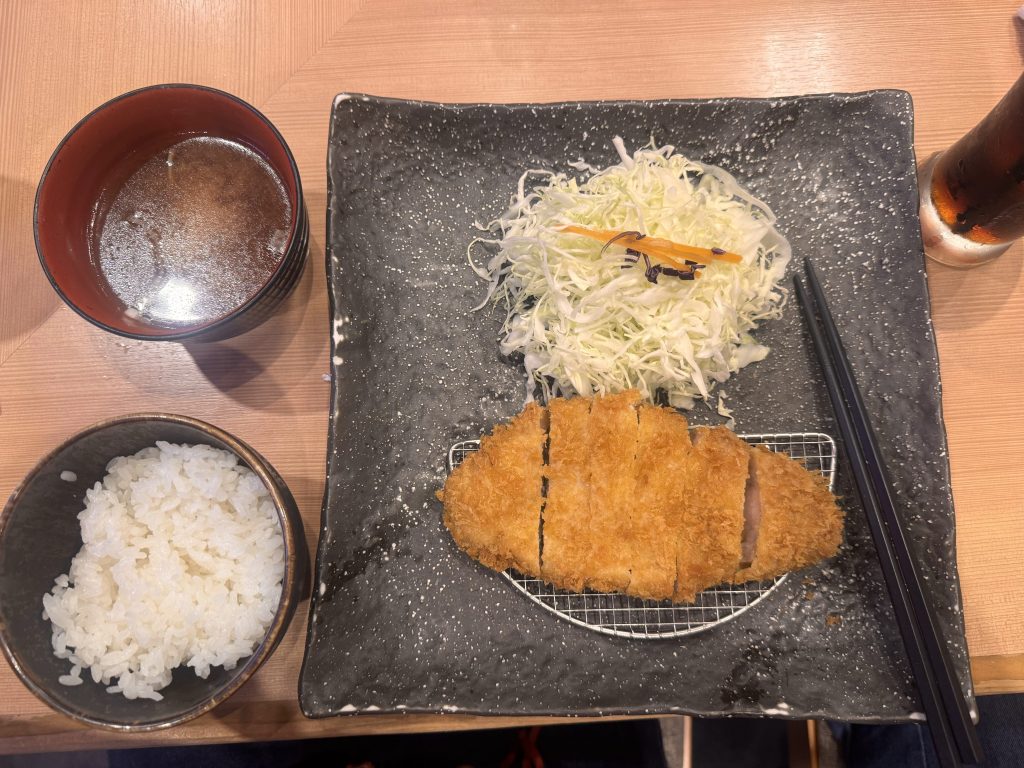
While eating, the sound of feeting stopping and cheering echoed throughout the street once again. We looked out to see the same mikoshi carriers passing by, still shouting and bouncing, sweating through their yukatas despite the thinning crowd. There was no audience to watch them, just the tradition pushing them. Watching them, I realized that beneath the food stalls, the fortunes, and the festivity was something much older: a deep respect for customs and traditions that don’t need a crowd to matter.

 Japanese Food Bites: Indulging in the Taste of Summer
Leave a comment