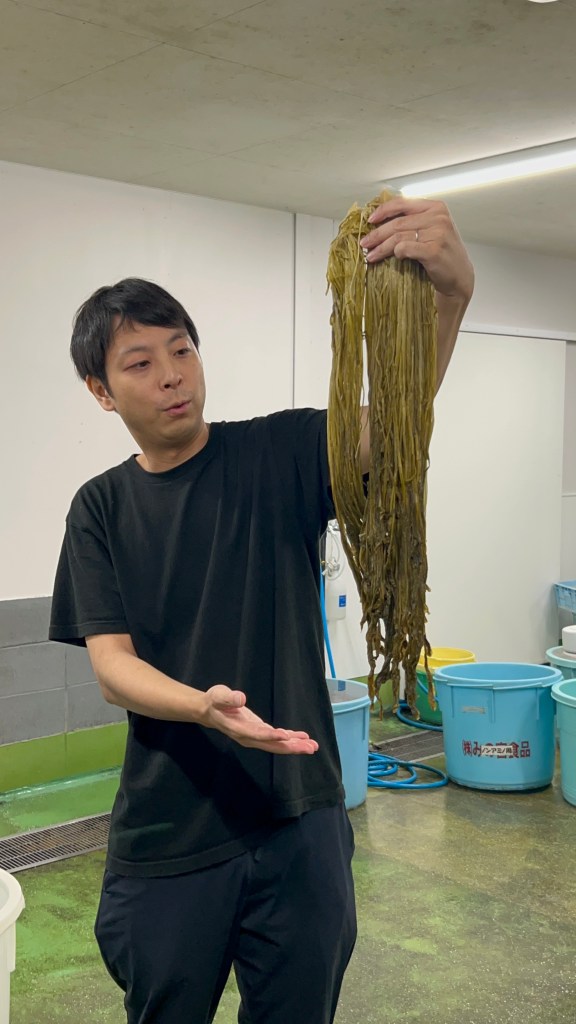
Yesterday we made our way to Kameoka City in the Kyoto Prefecture to visit the Kyozuke pickle factory! We were guided around by the wonderful CEO himself, Yohei Enami, who provided us with rich detail regarding how the small factory produces its oishi variety of pickles.
Pickling Process :
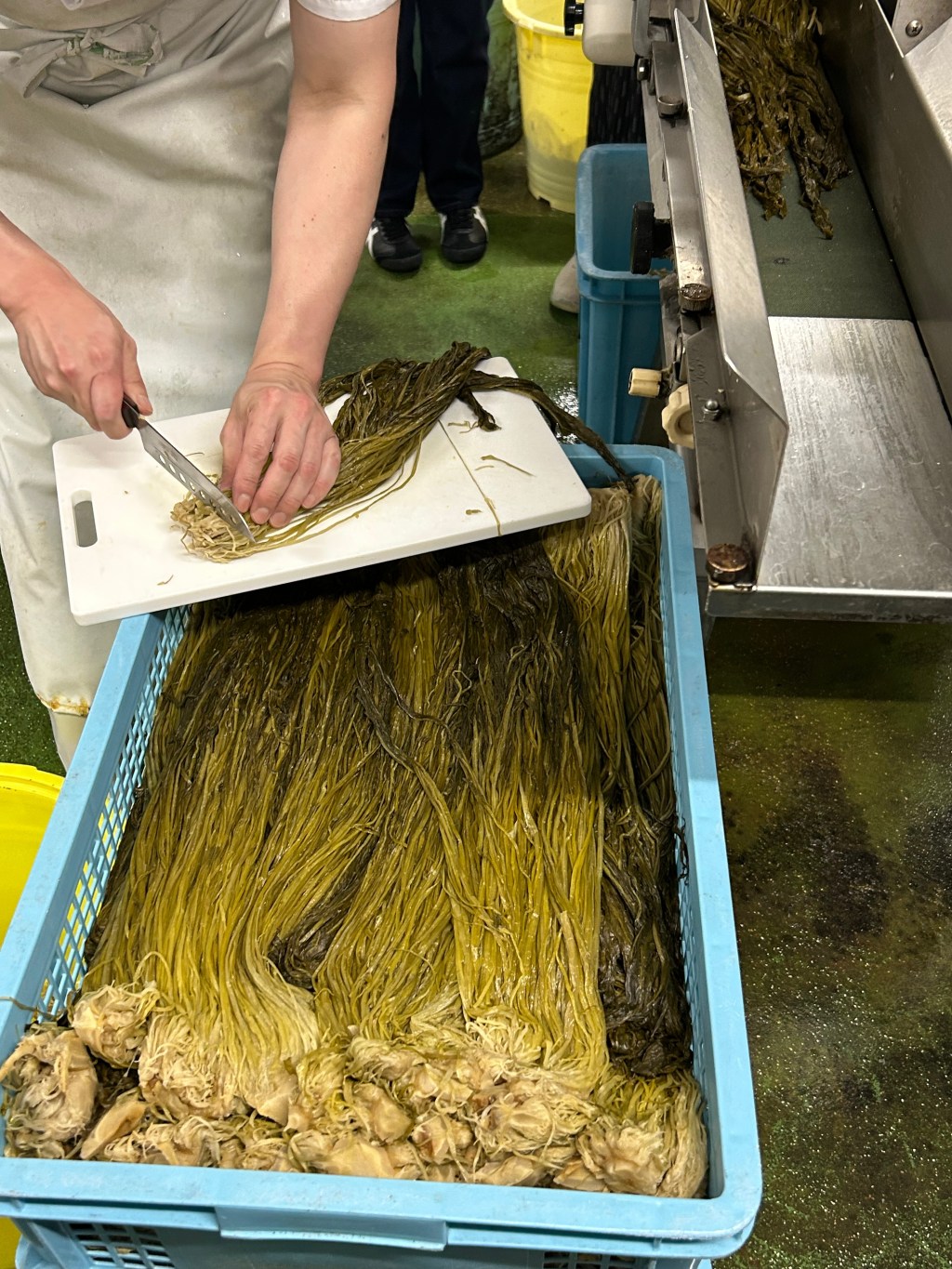
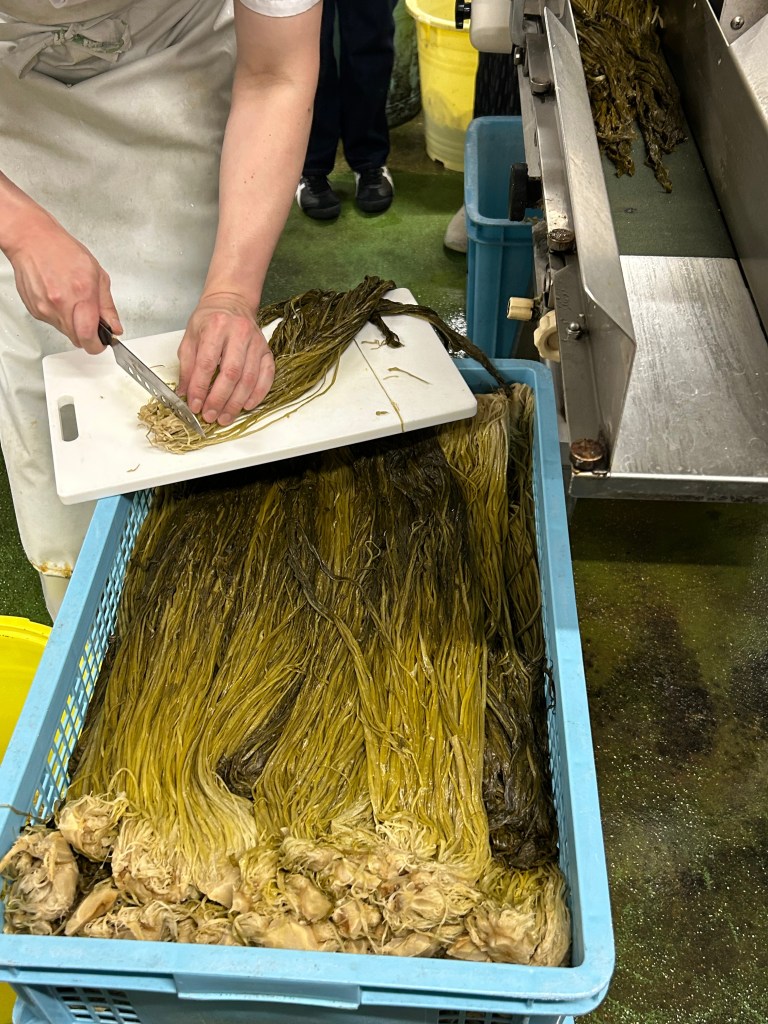
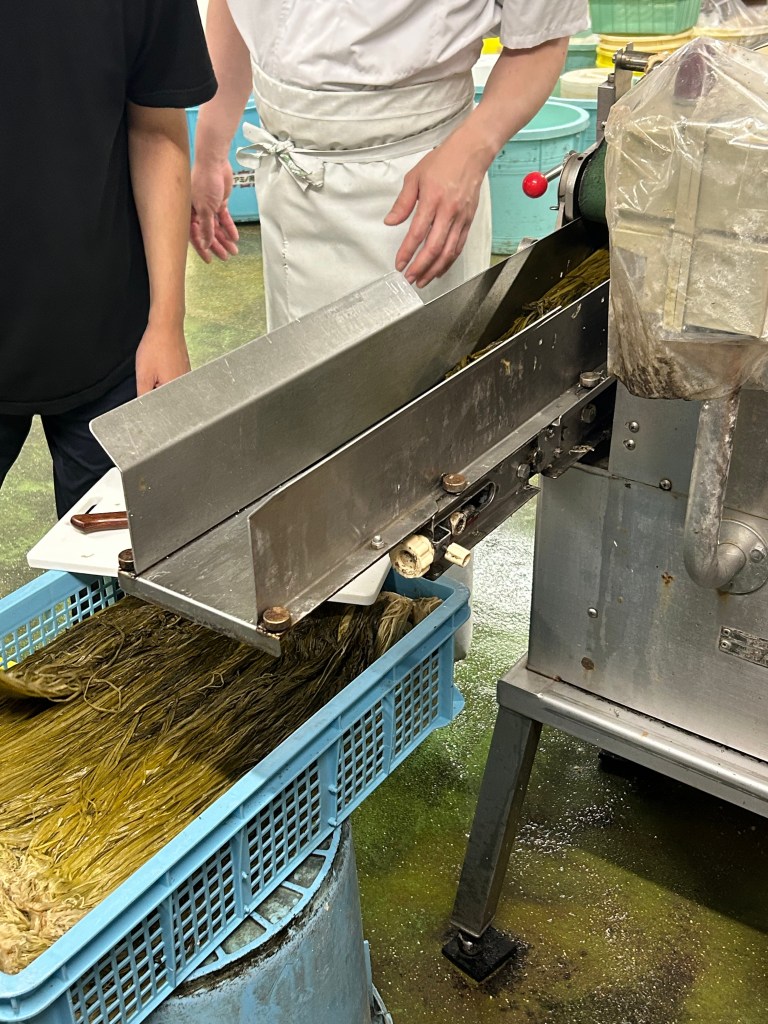
The vegetable shown has a duller color because it’s been pickled with salt, but the regular color is a much more vivid green. We were told that the long vegetable is in the Brassica family, and takes a year to fully grow. All of the vegetables used in Kyozuke’s products are either grown in their own farm or sourced from local farmers. Persia appreciated the assortment of vegetables that were being pickled and thought it was a wise way to ensure that plants did not go to waste. In a farm area such as Kameoka City, Kyozuke really thinks about how they can positively benefit the environment around them, even using seasonal vegetables in their pickling process. The specific pickles we observed went through the process of lactic fermentation, which is the same as how yoghurt is made. The long leafy vegetables went through a mechanical cutter, but the cut pieces are too salty to sell on their own, so some of the salt is removed by putting the cut vegetable into water.
Yeast :
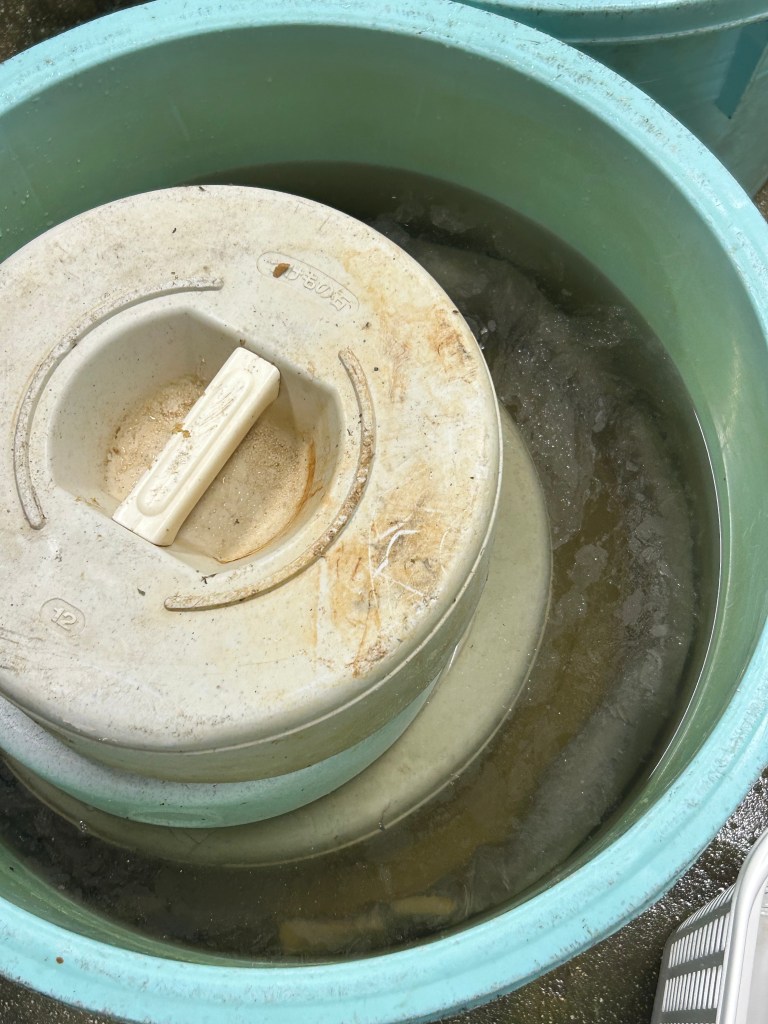
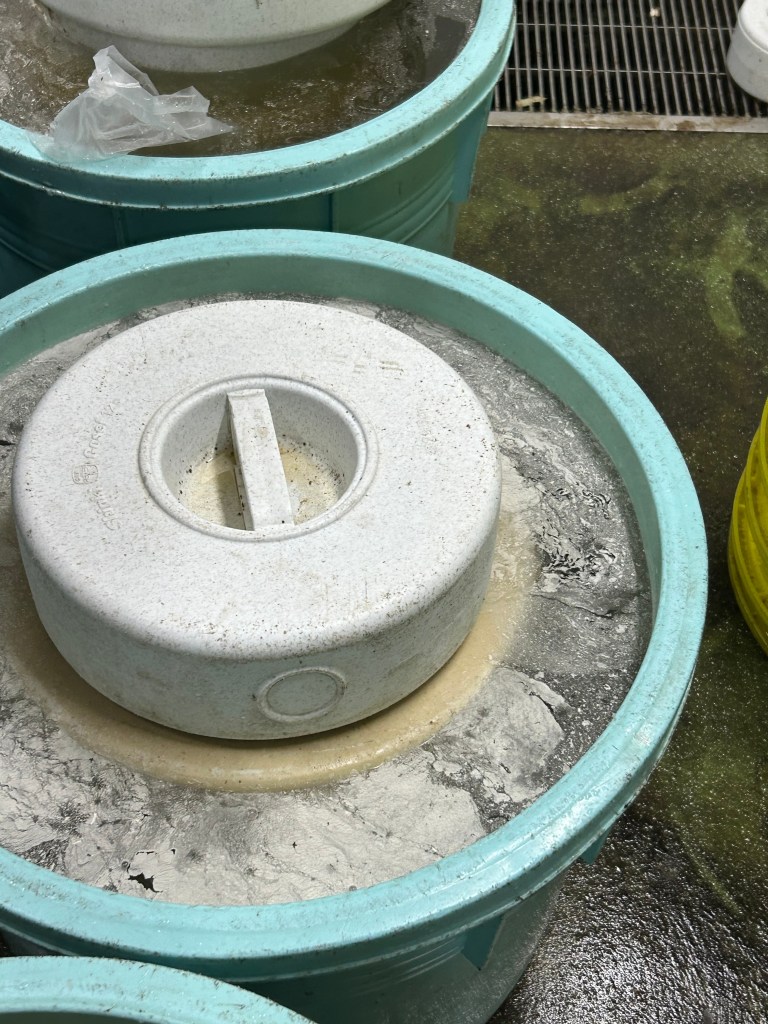
We then observed varying batches of pickles. The photograph on the left shows a batch of pickles that was six months through the process, and had not yet developed the white film that the latter batch possesses. The white filmy coat on top is actually yeast, which is part of the pickling process. The natural occurring presence of yeast ensures that the pickles have a distinct taste. The white plastic objects are weights placed on top of the pickles, and a fun fact is that traditionally large weighted stones were used to press the pickles down.
Rehydrating :
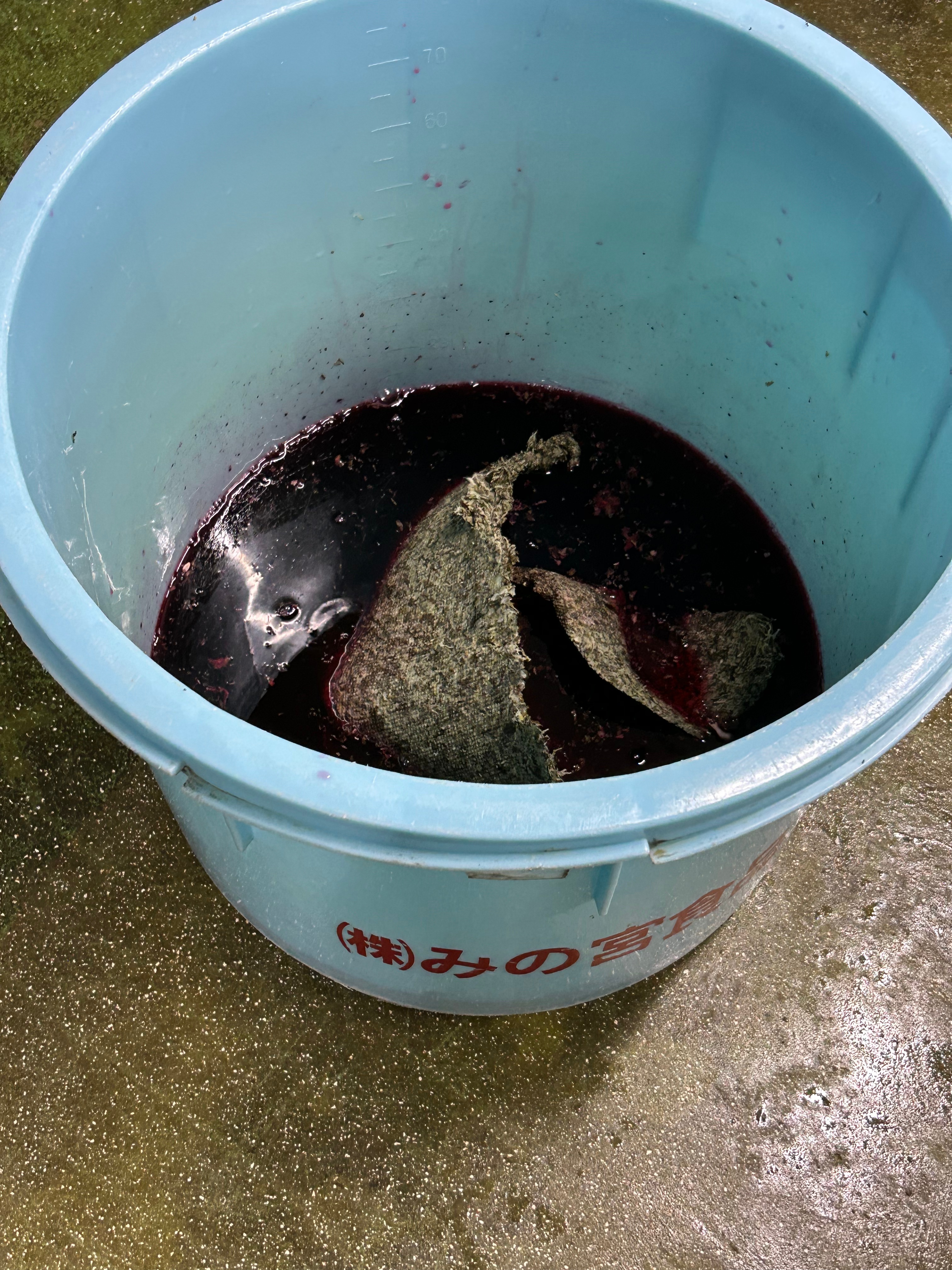
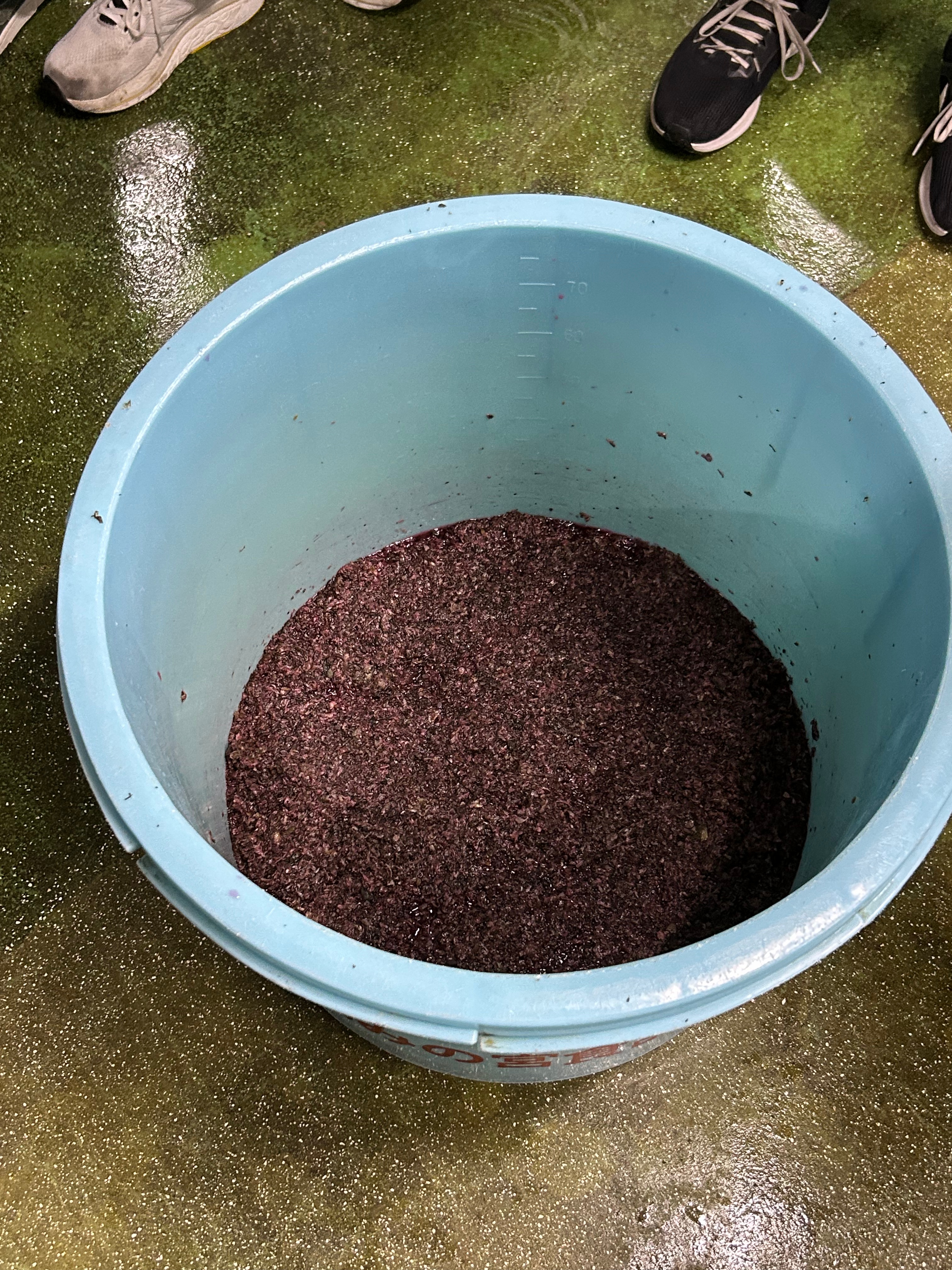
The photos above depict a pressed version of one of the three major types of tsukemono, called shibazuke, being rehydrated with a deep purple liquid. The vivid color comes from shiso leaves, and gives the infamous Kyoto pickles their purple hue. The liquid is also used in the pickling of umeboshi, and is made up of rice vinegar and white soy sauce. White soy sauce differs from regular soy sauce as it is made with wheat. The pickles themselves absorb the liquid and become rehydrated, almost ready to be sealed and sent away. Before that, however, the pickles are sterilized with boiling water before packaging. To prevent bacteria from growing the just-boiled pickles are placed in tubs of running cold well water, something the region is known for having.
Making & Trying Tsukemono :
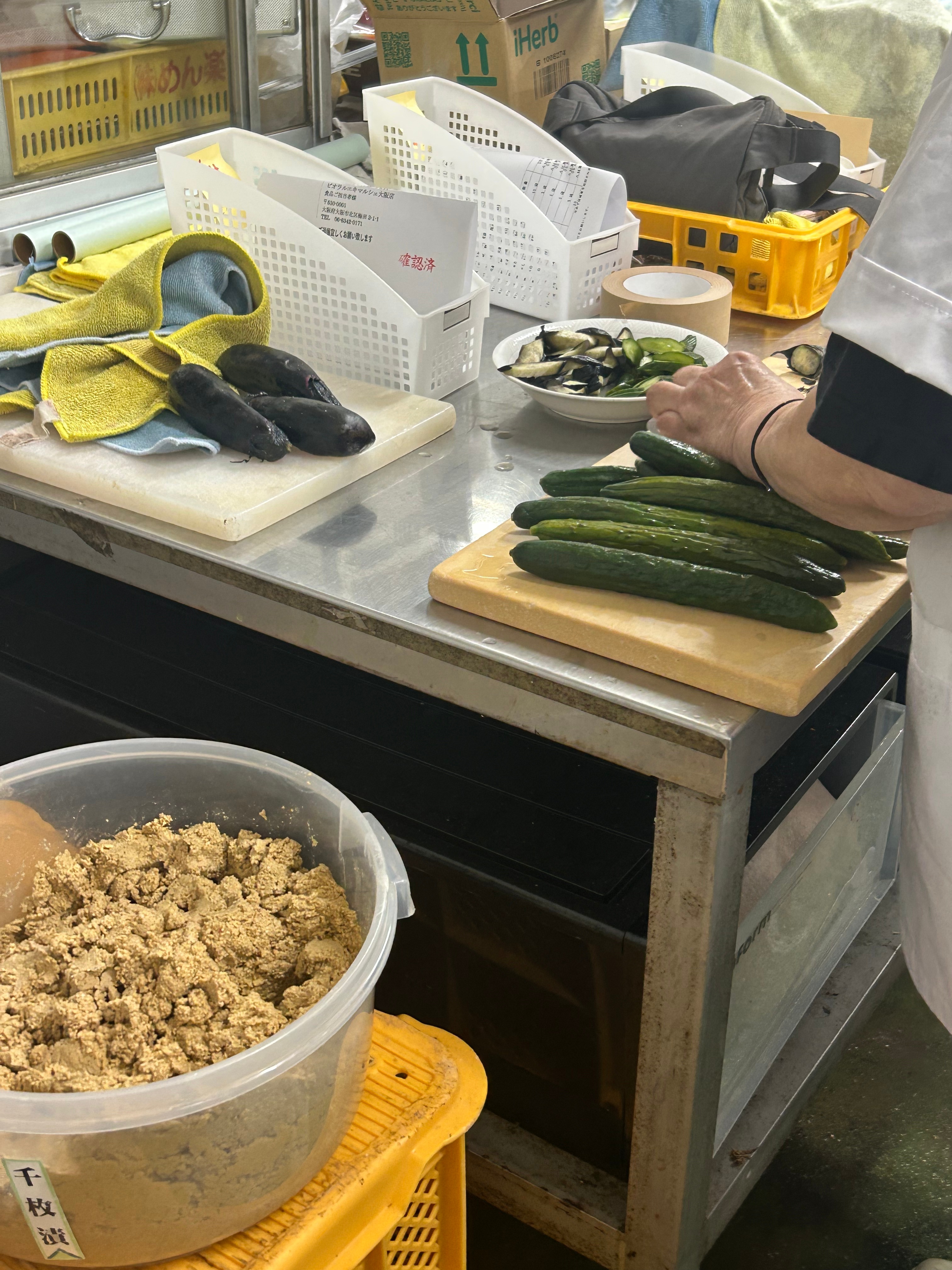
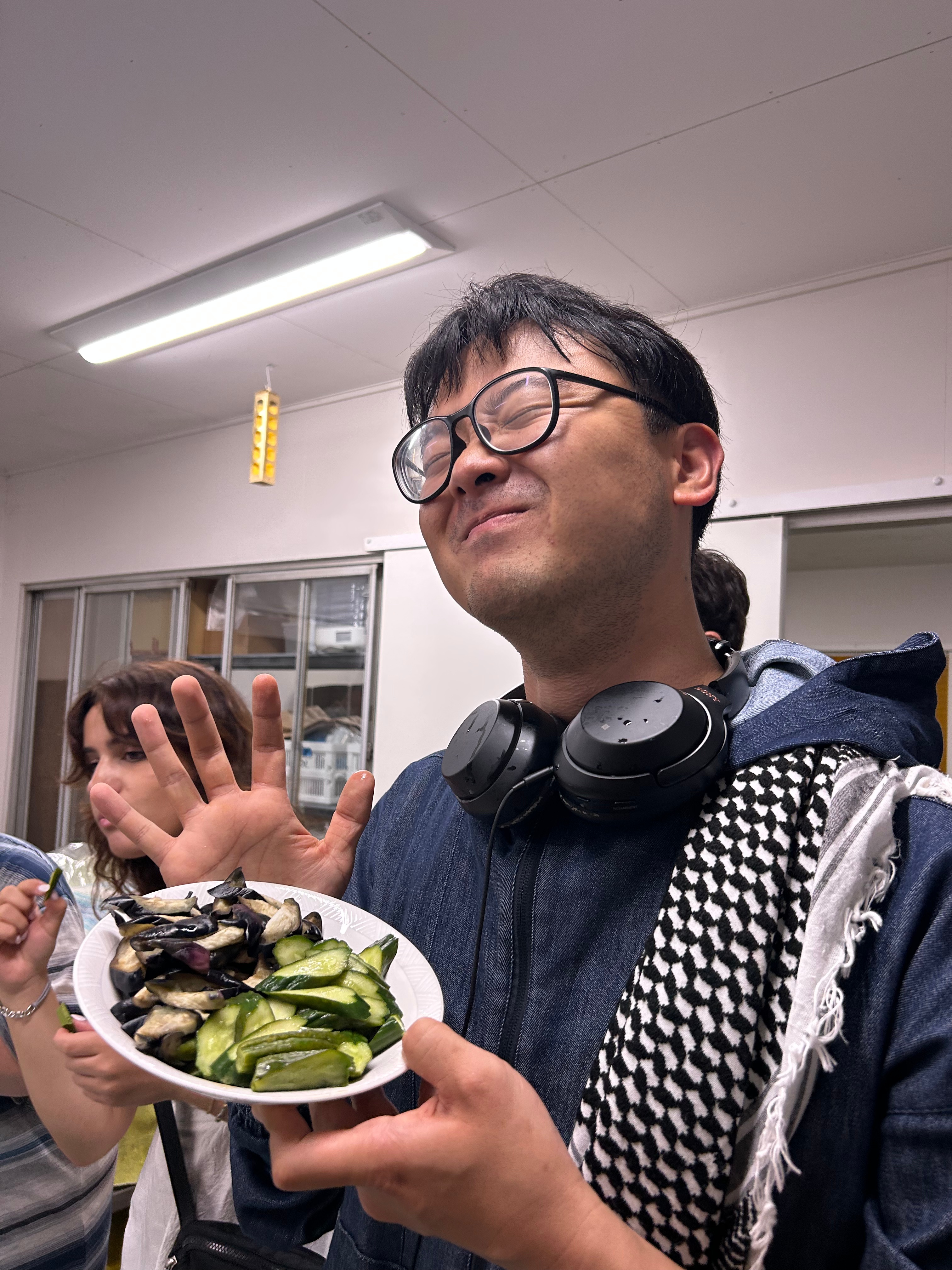
After our tour Yohei informed us that we would all be making our own pickles with a bag of rice bran that Kyozuke provided us. The scent of the bran conjured up memories of nearly empty wine bottles at summer dinners, and I was pleased to find out that the bran contains remains of pressed rice wine. I learned that similar to sourdough starters, rice bran can be fed on a regular basis and last years. Sora discussed how some Japanese families pass down rice bran from generation to generation, and the specific flavor varies because of the grandmothers hands. In order to successfully make a pickle we had to prepare our cucumbers, which meant vigorously rubbing them with salt. This not only takes the spikes off of the vegetable, it also creates small incisions in the cucumber. The salt then penetrates the cucumber and without washing it in water the cucumber is put into the fermented rice bran. After just 24 hours the cucumbers are ready to be eaten, though the time in the bran depends on how deep of a pickled taste one prefers. We had the delight of tasting fresh pickled cucumber and eggplant, and as I am writing about this my mouth is watering again. Unlike anything I’ve ever tasted, the cucumber maintained it’s crunchy exterior. However, the inside packed a punch with layers of sour flavor, dispersed throughout the small body of the vegetable. Overall it was a wonderful experience!


 Japanese Food Bites: Indulging in the Taste of Summer
Leave a reply to Beth Hastie Cancel reply